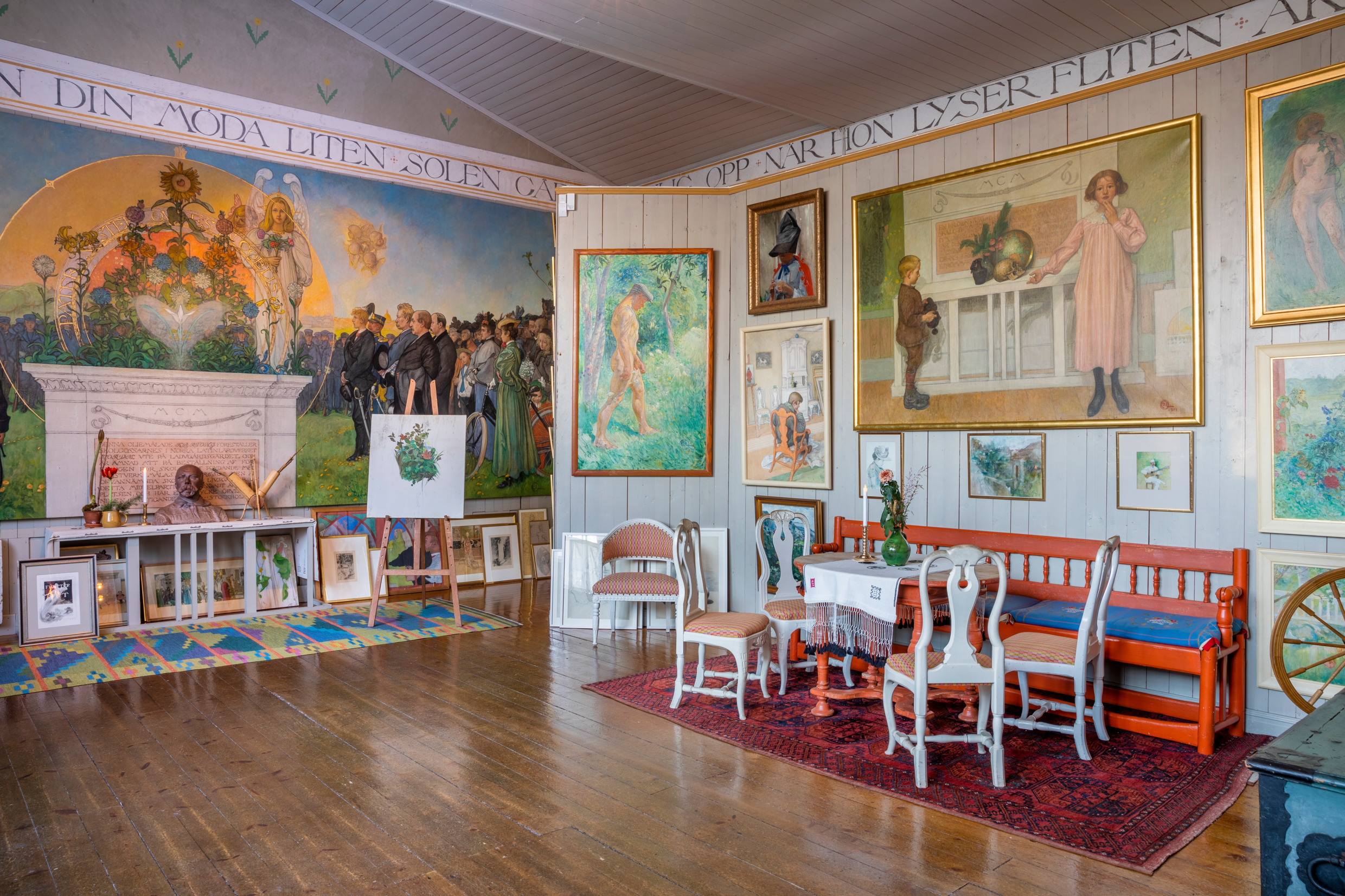
A large room with wooden floor, a mural and lots of large and small paintings.
Carl and Karin Larsson’s homestead
Many of the works of Swedish painter Carl Larsson featured his and his wife Karin’s home Little Hyttnäs in Sundborn, just outside Falun in the province of Dalarna. Their success – Karin as an interior designer and Carl as a painter – has made Little Hyttnäs one of the most famous artists’ homes in the world, now open to the public.
Photo credit: Jann Lipka/imagebank.sweden.se

9 historic Swedish homes you can visit

Step inside the homes of some of Sweden’s best-known artists, writers and cultural figures – from Carl and Karin Larsson’s colourful family home in Dalarna to Astrid Lindgren’s Stockholm apartment. Preserved interiors and personal collections offer a different, more intimate way to discover Swedish culture and history.

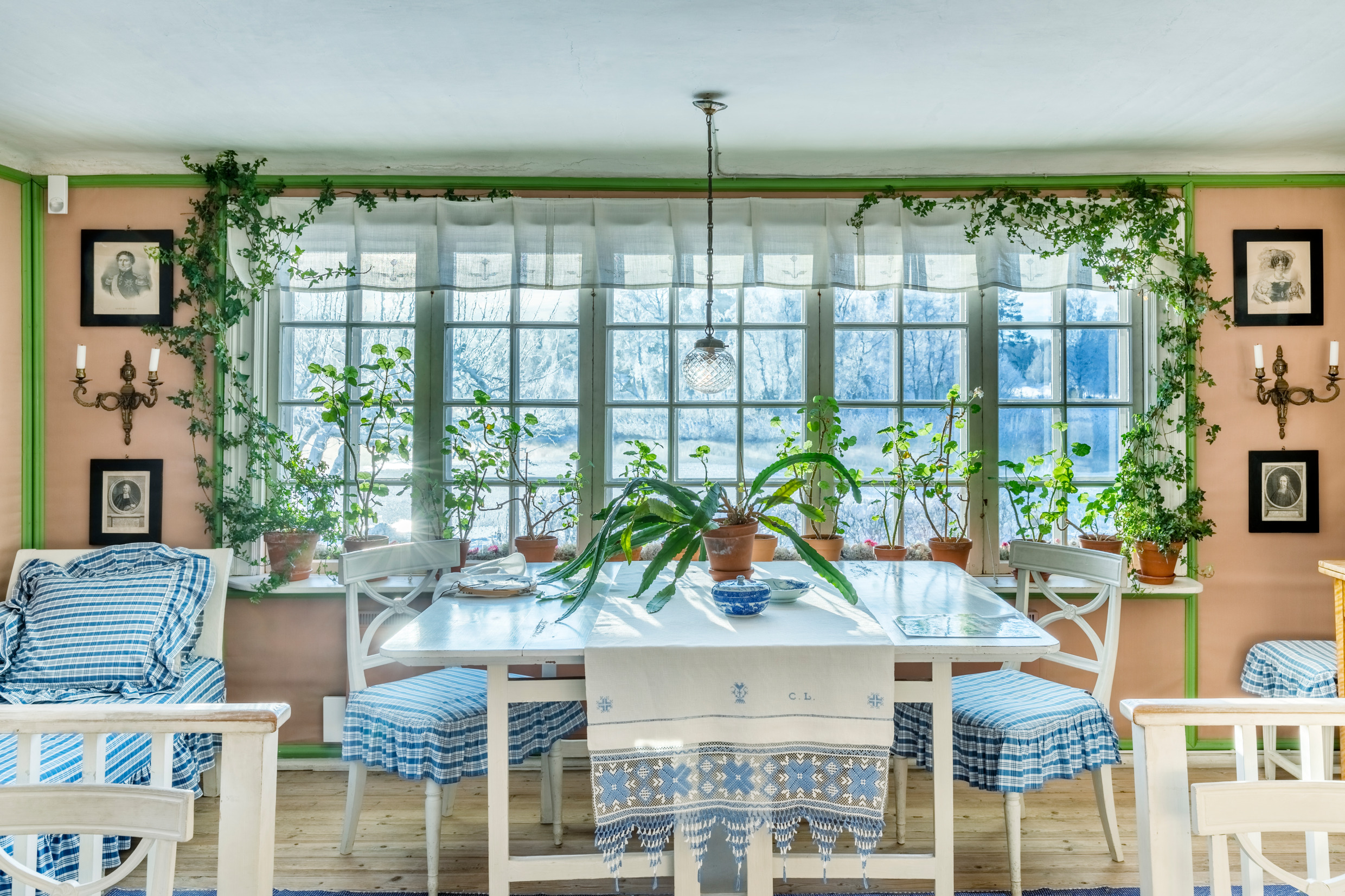
A kitchen with a large window, with lots of plants and white-and-blue fabrics.
Lilla Hyttnäs, Dalarna
Many of the works of Swedish painter Carl Larsson featured his and his wife Karin’s home Little Hyttnäs in Sundborn, just outside Falun in the province of Dalarna. Their success – Karin as an interior designer and Carl as a painter – has made Little Hyttnäs one of the most famous artist’s homes in the world, now open to the public.
Photo: Jann Lipka/imagebank.sweden.se

Carl and Karin Larsson’s Lilla Hyttnäs, Dalarna

The home of artists Carl and Karin Larsson in Sundborn is an icon of Swedish interior design. Carl, one of Sweden’s best-known artists, and Karin, an artist and designer who studied at the Royal Swedish Academy of Fine Arts in Stockholm, lived here with their eight children at the turn of the 20th century.

Together they transformed Lilla Hyttnäs into a colourful family home, with Karin shaping much of its distinctive character through her textiles, furniture and bold use of colour. Carl captured the house and family life in his paintings, helping to spread their ideas about art and interiors far beyond Sundborn. Today, the house remains much as the Larsson family knew it, and their distinctive style continues to influence Swedish interior design.

A beautiful light yellow stone house with a garden. In front of the house a green lawn and  there are trees and bushes on the sides.
Selma Lagerlöf's estate Mårbacka, Värmland
Selma Lagerlöf was the first woman to receive the Nobel Prize in Literature. Her home, the manor house Mårbacka in Värmland, can be visited on a guided tour.
Photo: KM IDÉ, Östra Ämtervik

Selma Lagerlöf’s Mårbacka, Värmland

Author Selma Lagerlöf was born at Mårbacka in Värmland in 1858, but the family had to sell the property in 1889, shortly after her father’s death. Following her success as a writer, Lagerlöf was able to buy back her childhood home in 1907. Two years later, she became the first woman to receive the Nobel Prize in Literature.

The house visitors see today was created for Selma Lagerlöf in the 1920s, when the original farmhouse was transformed into an elegant manor house. Preserved as it was at the time of her death in 1940, Mårbacka can be explored on guided tours through the rooms where Lagerlöf lived and worked, including the library and the desk where she sat and wrote her books by hand.

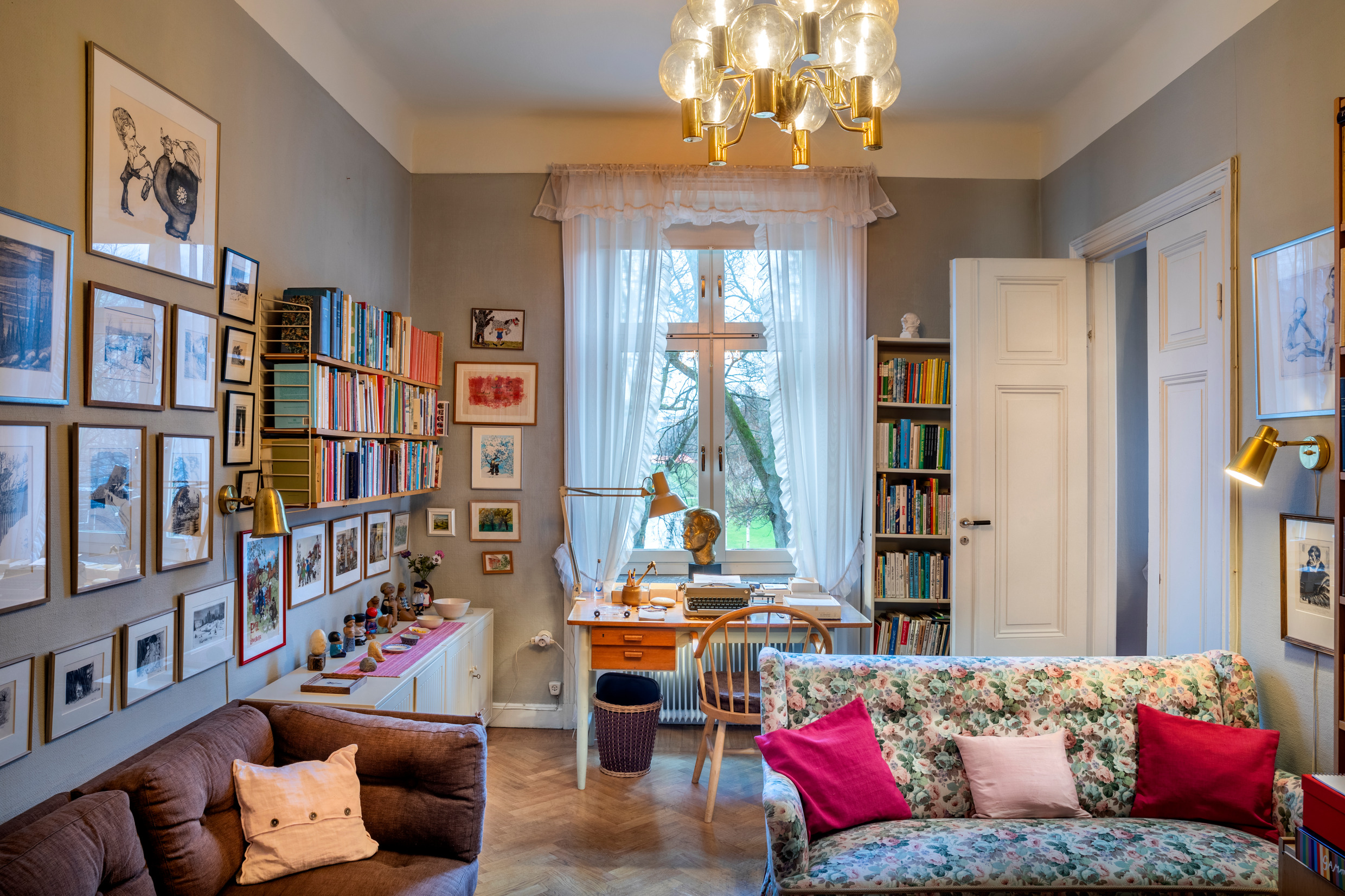
The interior of a room tightly filled with a desk, sofas, bookshelves and art on the walls.
Astrid Lindgren's apartment, Stockholm
Swedish author Astrid Lindgren is most known for her children’s books. This is her apartment on Dalagatan in Stockholm, which is now open for visitors on pre-booked guided tours.
Photo: Jann Lipka/imagebank.sweden.se

Astrid Lindgren’s apartment in Stockholm

For more than 60 years, world-famous children’s author Astrid Lindgren lived in an apartment overlooking Vasaparken in central Stockholm. This was where she wrote many of the stories that introduced readers around the world to characters including Pippi Longstocking, Karlsson-on-the-Roof and Emil of Lönneberga.

Lindgren died in 2002, and the four-room apartment has been preserved much as she left it, complete with books, artwork and personal belongings. Visitors can see the rooms where she lived and worked, including the bedroom where she would often write in bed in the mornings.

The apartment can only be visited on a pre-booked guided tour. Tours in English are available on selected dates, so booking well ahead is recommended.

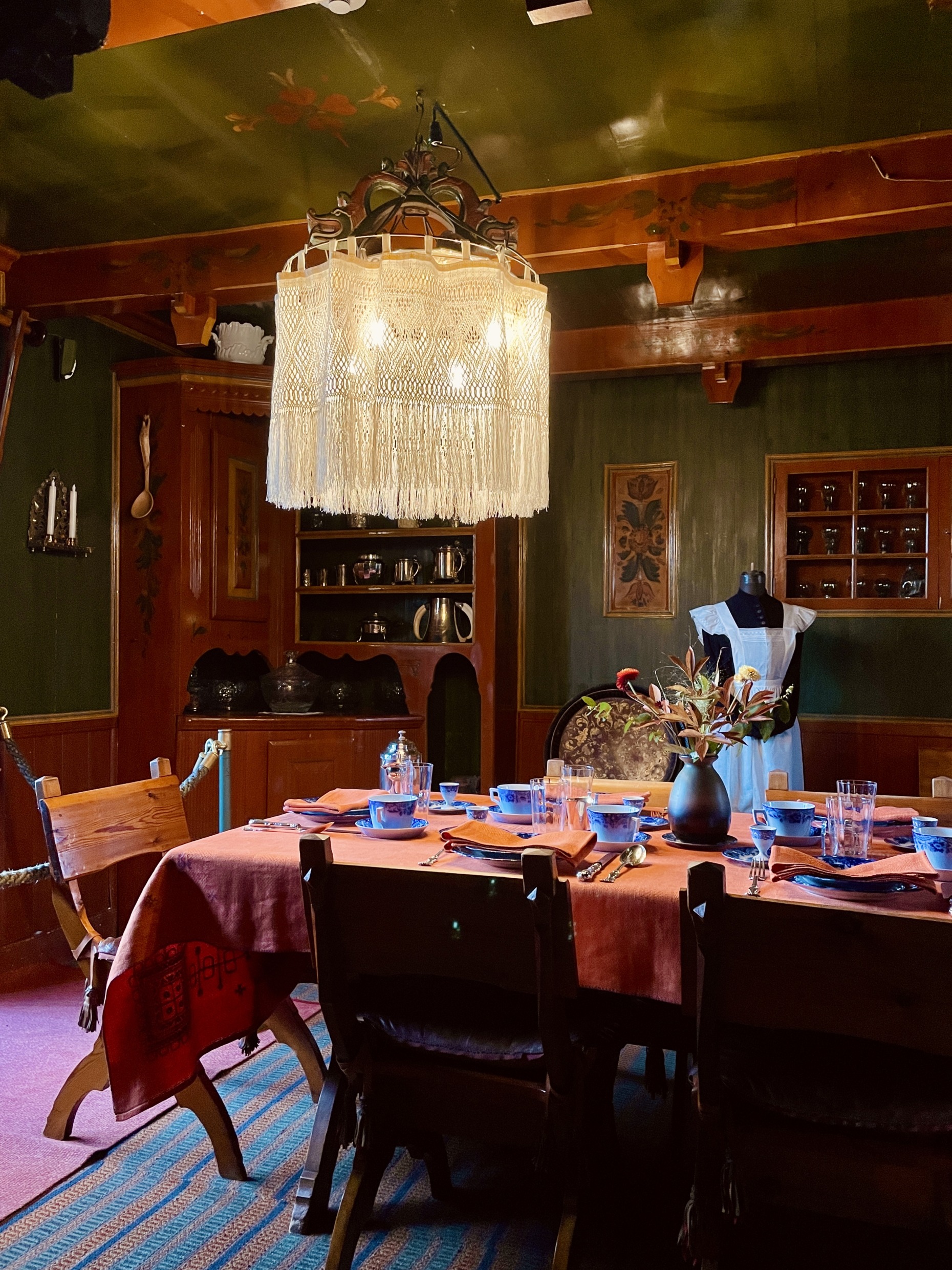
A set dinner table from Zorngården.
The Zorn House in Mora
Swedish artist Anders Zorn designed his home, The Zorn House (Zorngården), together with his wife Emma, and decorated it with craftwork from Dalarna as well as items from abroad.
Photo: Sabine Klautzsch/Visit Sweden

The Zorn House, Mora

Next door to the Zorn Museum in Mora stands The Zorn House, the home created by artist Anders Zorn and his wife Emma. Zorn acquired the plot near Mora Church in 1886, and what began as a modest cottage gradually grew into the distinctive home seen today.

Designed largely by Zorn himself, the house combines local timber-building traditions with influences from English architecture and his own ideas about Viking-era dwellings. Craftwork from Dalarna sits alongside objects collected on the couple’s travels, including woven tapestries, silverware, antique sculptures and paintings by old masters. The Zorns also equipped their home with luxuries that were unusual for the time, including refrigeration, stainless-steel kitchen counters, central heating, hot and cold running water and even a vacuum cleaner.

The Great Drawing Room at the Hallwyl Museum, with gilded woodwork, large tapestries, chandeliers, antique furniture and a grand piano.
The Hallwyl Museum, Stockholm
The Hallwyl Palace was completed in 1898 and designed by architect Isak Gustaf Clason. Pictured is the richly decorated Great Drawing Room.
Photo: Tina Klingspor/Hallwylska museet

The Hallwyl Palace, Stockholm

Behind an imposing façade in central Stockholm is the former home of Wilhelmina von Hallwyl and her husband Walther. Completed in 1898 as the couple’s winter residence, the 40-room palace combines Venetian Late Gothic and Early Spanish Renaissance influences.

In 1920, the couple donated the palace and its contents to the Swedish state. Wilhelmina was an avid collector and documented the household and its possessions in remarkable detail. Today, visitors can explore rooms filled with art, furniture and personal belongings – from Chinese porcelain and gilded Italian cabinets to a preserved slice of the couple’s wedding cake.

Today, the palace is home to the Hallwyl Museum, where the preserved interiors offer a glimpse into upper-class life in Stockholm around the turn of the 20th century.

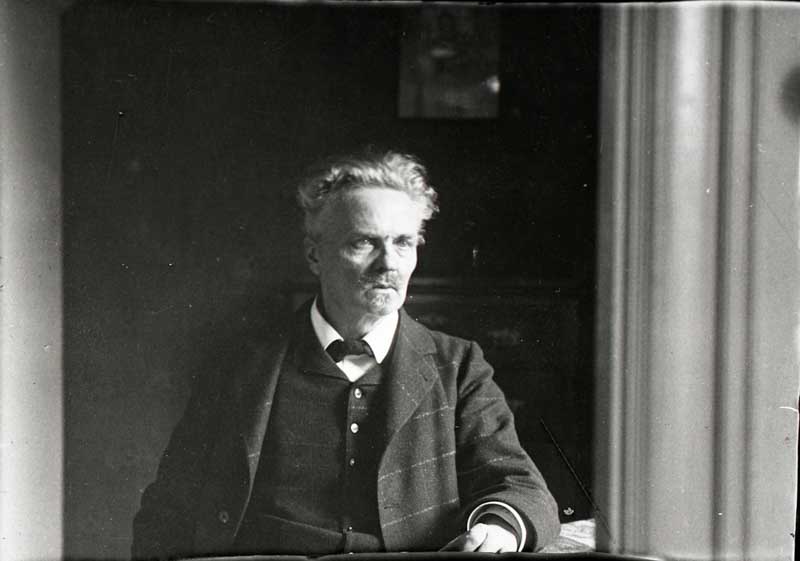
A portrait of August Strindberg looking out of a window in 1908.
August Strindberg, 1908
Swedish author August Strindberg looking out the window, 1908.
Photo: Herman Anderson

August Strindberg’s apartment in Stockholm

Writer and playwright August Strindberg spent the last four years of his life, from 1908 to 1912, in an apartment on Drottninggatan in central Stockholm. He called the building Blå tornet (‘the Blue Tower’), although its façade is anything but blue.

The preserved apartment consists of three rooms and Strindberg’s library of some 3,000 books. When he moved in, the building was newly built and equipped with modern comforts such as central heating and a lift. Other details reveal more about his personal tastes: he favoured bright yellow, green and red, and above his piano hung a mask of Beethoven, his favourite composer. Today, the apartment forms part of the Strindberg Museum.

Traditional Skåne-style farmhouse at Birgit Nilsson Museum in Svenstad, surrounded by open fields and trees in evening light.
Birgit Nilsson Museum in Skåne
Birgit Nilsson Museum in Svenstad, located at the soprano’s childhood farm between Båstad and Torekov in Skåne.
Photo: Gunilla Hovenäs/Birgit Nilsson Museum

Birgit Nilsson Museum, Skåne

Opera singer Birgit Nilsson performed on many of the world’s major stages, but grew up on a farm in Svenstad outside Båstad, where she lived until she was 23. Here, she helped with everyday farm work, from planting and digging up potatoes to harvesting hay and milking cows. The family lived without electricity or running water until modern conveniences were installed in the 1930s.

Today, her childhood home is part of the Birgit Nilsson Museum, with furniture, photographs and personal belongings offering a glimpse into her life before she became known on the international opera scene as “La Nilsson”. The house can only be visited on a guided tour.

Sven-Harry Karlsson's home, Stockholm
The home of art collector Sven Harry Karlsson is recreated at Sven-Harry's Art Museum in Stockholm.
Photo: Per Myrehed/Sven Harrys Konstmuseum

Sven-Harry’s Art Museum, Stockholm

At the top of Sven-Harry’s Art Museum in Stockholm sits something unexpected: an exact replica of the former home of Swedish builder and art collector Sven-Harry Karlsson, who died in 2026.

The rooms recreate Ekholmsnäs, the 18th-century manor on the island of Lidingö where he lived, with the interiors and collection arranged much as they were in the original home. Paintings by Carl Fredrik Hill, Helene Schjerfbeck, Ernst Josephson and August Strindberg sit alongside contemporary works by artists including Ylva Snöfrid and Dan Wolgers. Rugs by Märta Måås-Fjetterström share the rooms with furniture by Georg Haupt and Gio Ponti.

The collection can only be visited on a guided tour. Check the museum’s current programme for tours in English.

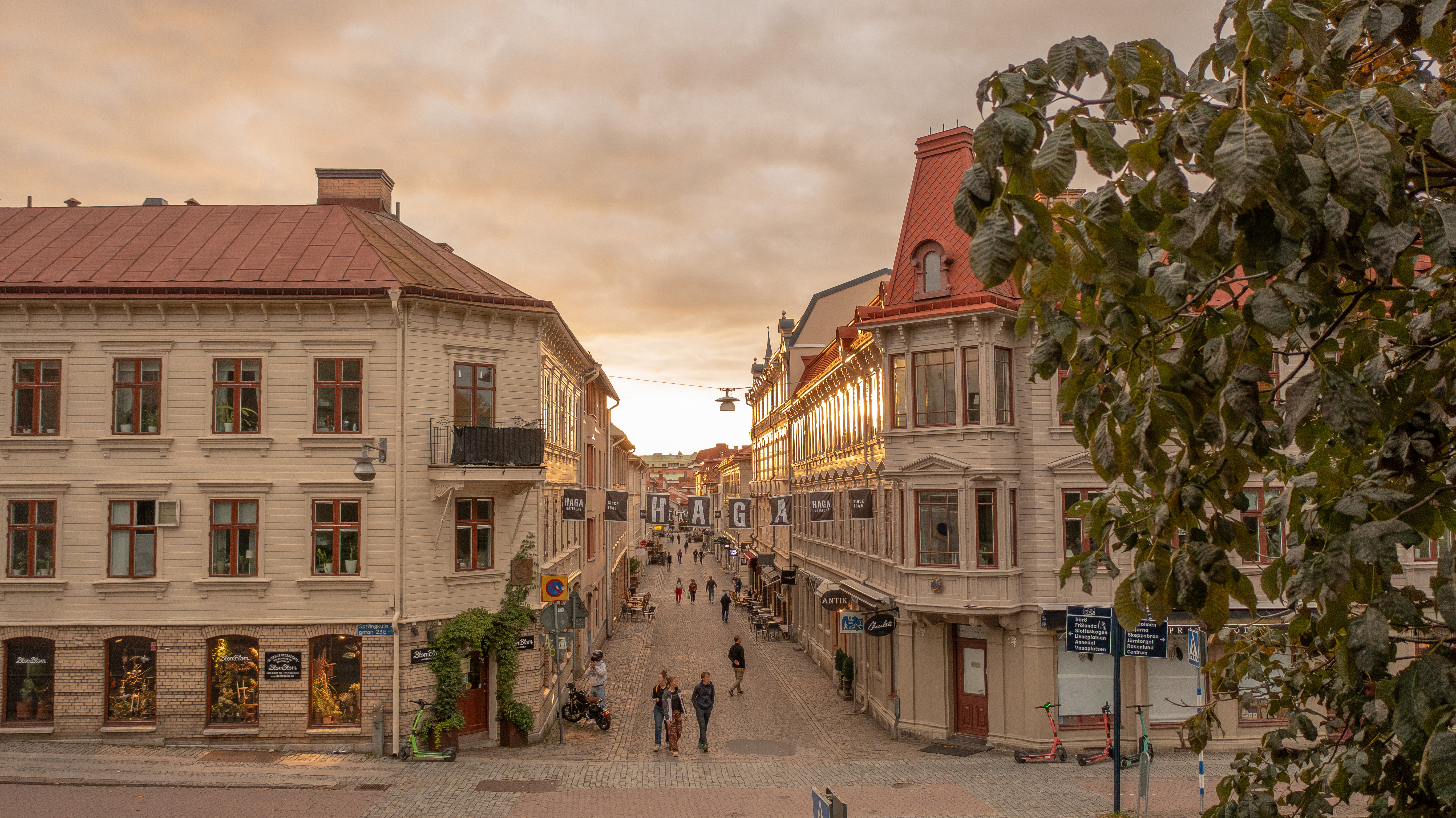
Cobblestone street lined with historic wooden buildings in Haga, one of Gothenburg’s oldest neighbourhoods.
Haga in Gothenburg
Haga is one of Gothenburg’s oldest neighbourhoods, known for its well-preserved wooden houses, independent shops and cosy cafés.
Photo: House of Vision/Göteborg & Co

The homes in Haga, Gothenburg

Not every preserved home belonged to a famous artist, author or wealthy collector. In Haga, Gothenburg’s first suburb, three museum apartments tell the story of everyday urban life from different periods.

The homes belonged to an iron carrier, a shoemaker and a factory worker in the neighbourhood. Their preserved interiors show how living conditions, furniture and everyday life changed from the late 19th century onwards.

The apartments are managed by the Museum of Gothenburg and can only be visited on pre-booked guided tours.