A person works with clay in a pottery workshop at Wallåkra Stoneware Factory in Skåne.
Wallåkra Stoneware Factory, Skåne
Shaping clay by hand is part of the long-standing ceramic tradition at Wallåkra Stoneware Factory in Skåne.
Photo credit: Apelöga/Visit Skåne

Too busy to scroll: 17 hands-on ways to experience Sweden

Some trips leave you with hundreds of photos. Others leave you with sticky fingers, sore arms and a clearer mind. In Sweden, you can build a timber raft, paint your own Dala horse or learn to bake cinnamon buns properly – experiences that keep both hands busy, leave little room for scrolling and a lot more room for actually being present.

Travel isn’t what it used to be. Then again, neither is life. Today, you can experience almost anything without leaving your sofa. Watch strangers hike mountains before you’ve even had breakfast, follow friends live from music festivals on the other side of the world or scroll through endless travel guides generated just for you. Inspiration has never been more accessible.

But somewhere along the way, travel also became something to consume rather than experience. How often do you revisit the videos from that concert you spent half the evening filming? How much of a destination do you actually remember when you were busy trying to capture the perfect photo of it? And after hours of scrolling through other people’s adventures, do you still feel inspired – or simply numb?

The rise of intentional travel

It may also explain why more travellers are seeking experiences that involve learning, making and doing rather than simply observing. 69 per cent of Millennials and Gen Z travellers say creating something with their hands is one of the most rewarding parts of travelling, according to the American Express 2026 Global Travel Trends Report. Even more, 82 per cent, believe learning a new skill makes a trip more memorable.

At the same time, offline experiences are becoming increasingly appealing. Around the world, screen-free cafés centred around board games, reading and crafts are gaining popularity. Even at Coachella – one of the world’s most Instagrammed festivals – Pinterest hosted a phone-free space challenging visitors to disconnect from their screens and reconnect with their creativity, arguing that “the best moments in life happen off-screen”.

The desire to slow down while travelling is also growing. According to Amadeus’ Travel Dreams 2026 report, many travellers now prioritise mental wellbeing, calmer experiences and digital detoxes over packed itineraries and constant stimulation. Many also see travel as a way to reconnect with themselves, build confidence and return home feeling mentally refreshed.

Sweden keeps both hands busy

In Sweden, many hands-on experiences are closely tied to nature, traditional skills and local food culture. Whether you're building a timber raft, rolling cinnamon buns or steering a husky sled through snowy forests, these are activities that leave little room for distractions. When both hands are busy, documenting every moment on your phone simply isn’t possible.

And perhaps that’s why these activities tend to stay with you longer. Not as perfect photos or souvenir-shop purchases, but as sticky fingers, tired legs and the satisfying feeling of having learned something new.

To help you get started, we’ve gathered 17 hands-on experiences across Sweden – from outdoor adventures and traditional crafts to edible souvenirs. Because when your hands are full, your mind is free.

17 hands-on memories to make in Sweden

1 / 5

Timber rafting

A timber raft journey on the Klarälven river combines outdoor adventure with a centuries-old tradition of log driving.

Photo: John van Helvert/Visit Värmland

/ 5
Two people carry equipment onto a timber raft in the Klarälven river in Värmland beneath dramatic clouds.

Timber rafting

Photo: John van Helvert/Visit Värmland

Huskies

Huskies

Photo: Asaf Kliger/imagebank.sweden.se

A person kayaking between small islands in lake Vänern during summer.

Lurö archipelago

Photo: Roger Borgelid/imagebank.sweden.se

A group of cyclists ride mountain bikes on a trail above the treeline in Tänndalen, with mountains in the background.

Cycling in Tänndalen

Photo: Julius Aspman/Tänndalen

People climbing the Via Ferrata route on Skuleberget, with a dramatic forested valley and coastline stretching out in the background.

Via Ferrata, Skuleberget

Photo: Höga Kusten

Nature experiences to throw yourself into

Build your own timber raft in Värmland

On the Klarälven river in Värmland, the journey begins long before you reach the water. Using logs and rope, you’ll build your own timber raft by hand before drifting downstream through forests and sandbanks. Rooted in Sweden’s old log-driving tradition and marked by quick shifts between activity and relaxation, it’s a slower way to travel where nature – not your feed – sets the pace.

Try the life of a husky musher in Arctic Sweden

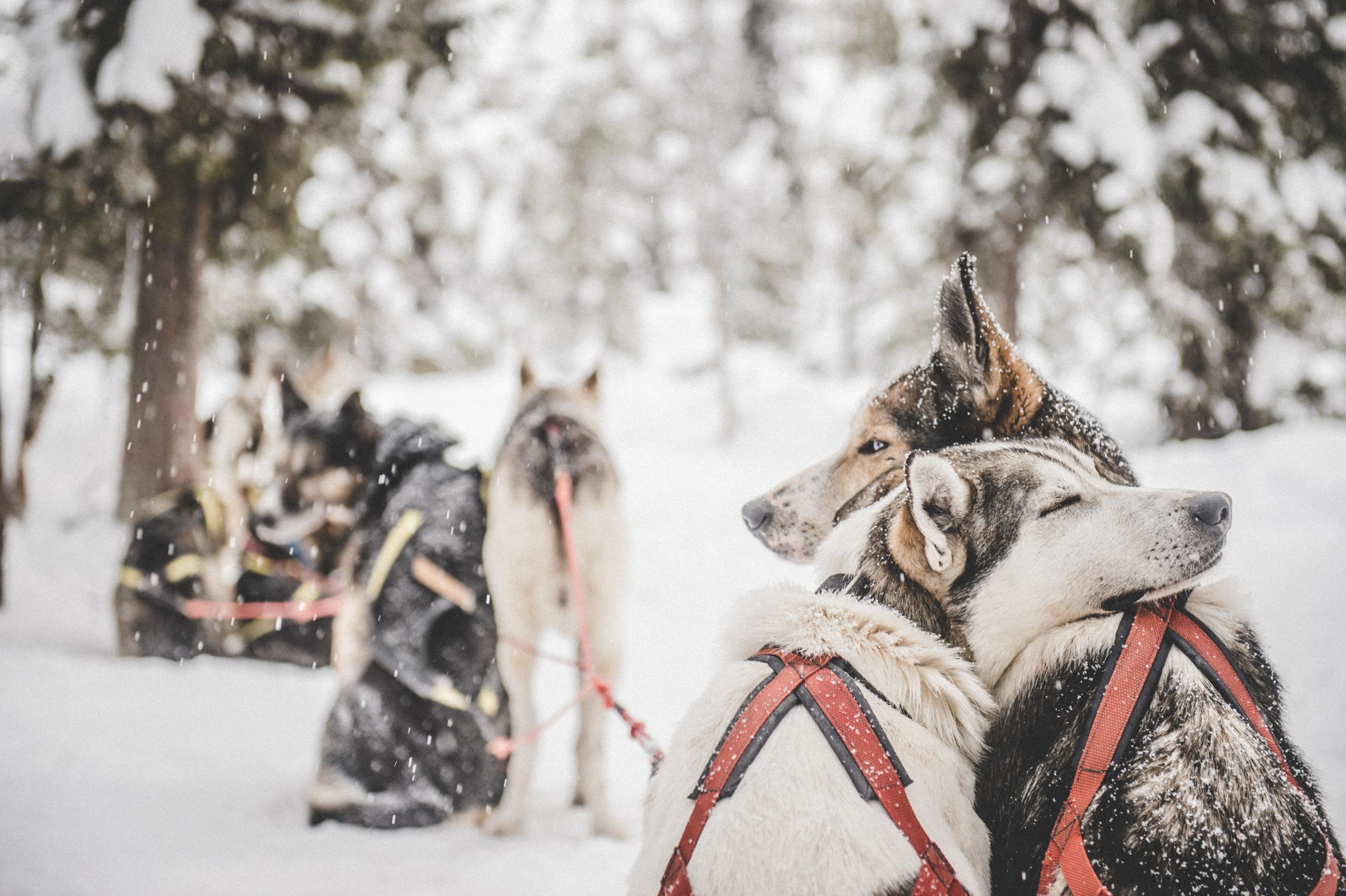
Go from constant noise to near silence as a team of eager huskies pulls you through snow-covered forests in Sweden’s far north. Several companies across Arctic Sweden offer the chance to drive your own husky team and experience life as a musher, including Explore The North. With two feet planted on the sled and icy air on your face, it’s an experience that demands your full attention and rewards you with a rare sense of calm.

Kayak through Europe’s largest freshwater archipelago

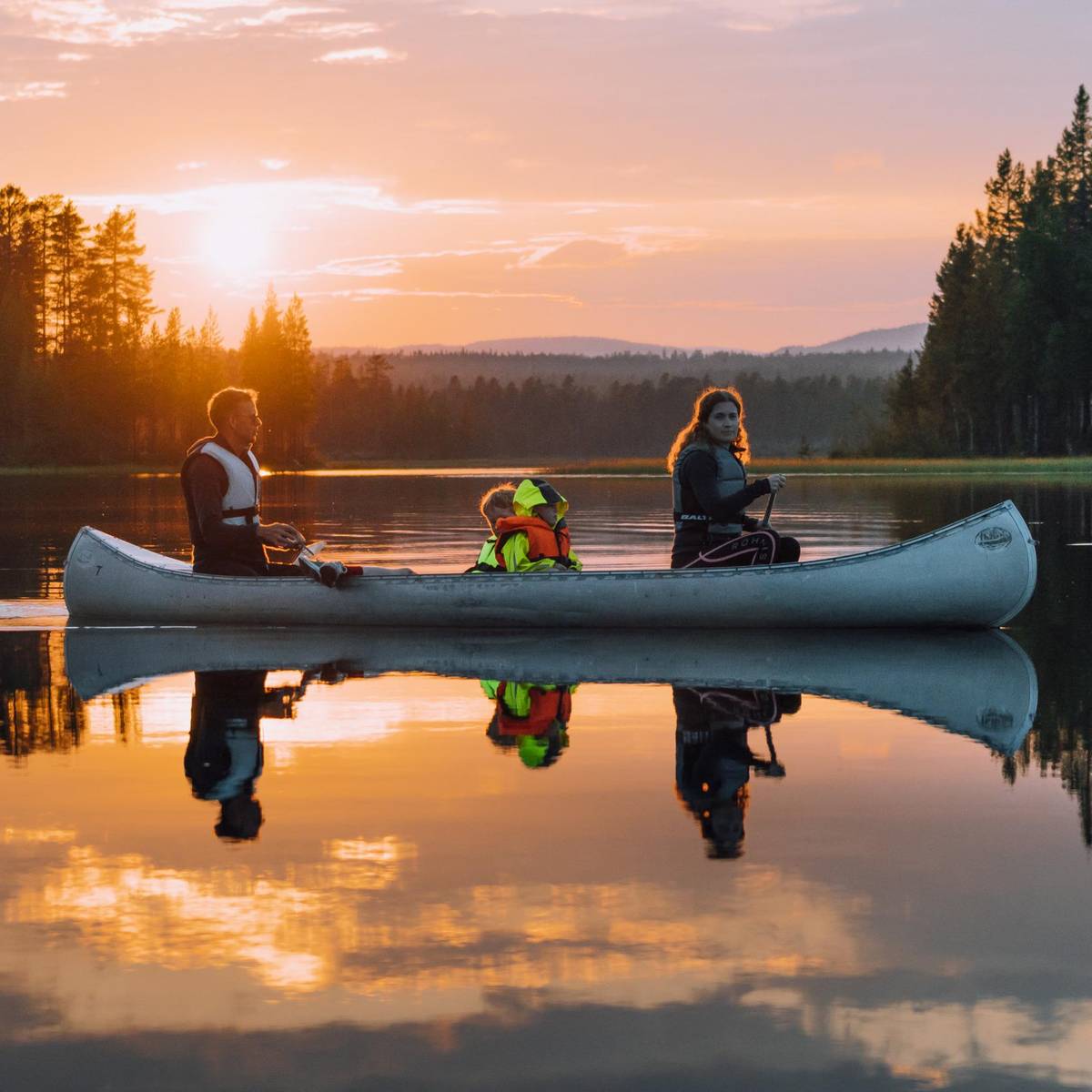
Lake Vänern is home to the Lurö archipelago, Europe’s largest freshwater archipelago, with around 250 islands and islets to explore. Paddle between rocky shores and pine-covered islands, stopping wherever it looks inviting for a swim, picnic or overnight camp. Several companies around the lake offer kayak hire and guided tours through what feels like an endless playground for paddlers.

Cycle down Sweden’s mountain trails

When the snow melts, many of Sweden’s ski resorts transform into mountain biking destinations. In Tänndalen, beginners and families can ease into mountain biking on flow trails above the treeline, while Åre offers adrenaline-filled downhill routes for more experienced riders. Between winding turns, sweeping views and muddy trails, keeping your balance becomes far more important than checking your notifications.

Climb a Via Ferrata route in the High Coast

Challenge your fear of heights while climbing steep rock faces above the UNESCO-listed High Coast. At Via Ferrata Skuleberget, secured routes make the climb accessible to both beginners and seasoned adventurers, with the High Coast spread out below you as a reward. With both hands occupied and your focus fixed firmly on the next step, it’s difficult to think about much else.

Dive into hidden shipwrecks in Blekinge

Beneath the surface of the Blekinge archipelago lies a submerged world of unusually well-preserved shipwrecks. Since Karlskrona was founded in the late 17th century, dozens of ships have been deliberately sunk throughout the archipelago, many of them now resting within the UNESCO-listed naval landscape around Karlskrona. Join a wreck-diving tour and explore a hidden piece of Swedish history from underwater.

1 / 5

Dala horses

The Dala horse is the most bought Swedish souvenir. It is a stylised wooden horse, most commonly red, with a typical folk art decoration called kurbits. The Dala horse has been made in Dalarna since the 1600’s and is still mainly manufactured in the village of Nusnäs, outside Mora.

Photo: Amanda Westerbom/imagebank.sweden.se

/ 5
Three painted wooden Dala horses sits on a wooden rail with the Swedish forest in the background.

Dala horses

Photo: Amanda Westerbom/imagebank.sweden.se

Molten glass is shaped on a blowpipe inside a glassworks in Sweden’s Kingdom of Crystal (Glasriket).

Molten glass in the Kingdom of Crystal

Photo: www.glasriket.se/Lars Nilsson

Hands shape clay on a pottery wheel at Wallåkra Stoneware Factory in Skåne.

Pottering at Wallåkra Stoneware Factory

Photo: David Seitz/Visit Skåne

Sámi bracelets

Sámi bracelets

Photo: Pernilla Ahlsén/imagebank.sweden.se

A person carves an ice sculpture inside the Icehotel in Jukkasjärvi.

Icesculpting at the Icehotel

Photo: Karl & Moa/Icehotel

Hands-on culture experiences

Paint your own Dala horse

The Dala horse may be Sweden’s most iconic souvenir, found in countless gift shops across the country. But in Nusnäs, where the traditional wooden horses are still made and painted by hand, you can create one yourself instead of simply buying one. At Nils Olsson Dalahästar, visitors can drop in and paint their own horse however they please. Traditional kurbits patterns, polka dots or stripes – what will yours look like?

Try glassblowing in Småland

Deep in the forests of Småland lies Sweden’s Kingdom of Crystal (Glasriket), where glass has been crafted for centuries. Today, several glassworks offer visitors the chance to try glassblowing for themselves. It’s hot, sweaty and surprisingly physical – but you’ll leave with something no souvenir shop could ever sell.

Shape clay on a pottery wheel in Skåne

Northwestern Skåne has a long tradition of stoneware and ceramics, with studios and workshops scattered across the region. At Wallåkra Stoneware Factory, you can try shaping clay on a pottery wheel yourself, feeling the clay shift and spin beneath your fingers. Whether your creation turns into a bowl, mug or something slightly less recognisable, that’s part of the charm.

Try Sámi handicrafting in Kiruna

Sweden’s Indigenous Sámi people have a long tradition of creating practical objects from materials such as leather, wood, horn and yarn. At Camp Ripan in Kiruna, visitors can try simple crafting techniques inspired by Sámi traditions while learning more about Sámi culture and everyday life. A chance to learn something new with your hands while gaining insight into a culture many visitors know little about.

Sculpt ice at the Icehotel in Jukkasjärvi

Visiting the world’s first ice hotel is memorable enough – but carving your own sculpture from crystal-clear Torne River ice makes the experience even more hands-on. At the Icehotel in Jukkasjärvi, you’ll learn the basics of ice sculpting using professional tools while dressed head-to-toe in warm winter gear. Complete concentration and a very temporary masterpiece guaranteed.

Get crafty in the Stockholm Archipelago

Just 30 minutes by boat from central Stockholm, the islands of Fjäderholmarna have become known as “Craft Island” thanks to their growing community of artists and makers. Choose between workshops in woodcarving, watercolour painting, knitting and more, all with a relaxed, no-pressure approach to creativity. The kind of experience that quietly turns a few hours into one of the most memorable parts of a trip.

1 / 4

Rolling 'polkagrisar' in Gränna, Småland

The red-and-white ‘polkagris’ has been handmade in the lakeside town of Gränna since the 19th century and remains one of Sweden’s most iconic sweets.

Photo: Tina Stafrén/imagebank.sweden.se

/ 4
A red-and-white polkagris candy is rolled into shape on a worktable in Gränna.

Rolling 'polkagrisar' in Gränna, Småland

Photo: Tina Stafrén/imagebank.sweden.se

A group of friends are baking cinnamon buns. A woman are putting together a bun while the friends looking.

Baking cinnamon buns

Photo: Anna Hållams/imagebank.sweden.se

Three women and a male guide are standing in front of wood fired ovens in a bakery. One of the women are showing a freshly baked crispbread to the others.

Baking crispbread with a guide

Photo: Tina Stafrén/imagebank.sweden.se

A guide in 18th-century clothing speaks to visitors inside the historic pharmacy at Skansen in Stockholm.

Spicing schnapps at Skansen

Photo: Alex Hinchcliffe/Skansen

Swedish goodies, made by you

Roll your own polkagris in Gränna

The red-and-white ‘polkagris’ can be found in sweet shops all over Sweden, but for the real deal, head to the charming town of Gränna, where the candy was first invented in the 19th century by a single mother. At Grenna Polkagriskokeri, visitors can join the bakers and learn how to pull, twist and roll the striped candy by hand. Expect sticky fingers and a newfound respect for traditional candy makers.

Learn the art of flatbread baking in the High Coast

Be a baker for an hour at Mjälloms Tunnbröd in the High Coast, Sweden’s oldest flatbread bakery. Roll the dough thin by hand and bake it quickly on a hot griddle using methods shaped by northern Sweden’s long winters. Flour-covered clothes and bread that rarely survives the journey home come with the territory.

Master the cinnamon bun in the Stockholm Archipelago

Few Swedish treats are more beloved than the cinnamon bun. At Vaxholms Bed & Breakfast in the Stockholm Archipelago, visitors can learn the secrets behind soft, buttery buns. And once you know how to make them yourself, you can recreate that Swedish fika feeling – and the heavenly smell of freshly baked cinnamon buns – back home again. And again. And again.

Try your hand at crispbread baking in Dalarna

Step into the warm, flour-dusted bakery of Skedvi Bröd, where traditional Swedish round-shaped crispbread has been baked in wood-fired ovens for more than a century. Guided by the baker’s own sense of timing rather than a mobile alarm, you’ll learn some of the tricks behind perfectly baked crispbread before baking a few rounds of your own to take home.

Spice your own schnapps at Skansen

At Skansen in Stockholm, the world’s oldest open-air museum, visitors can step inside an 18th-century pharmacy and create their own spice blend for Swedish schnapps (‘snaps’). Guided by a pharmacist in historical dress, you’ll mix herbs and spices once thought to cure everything from stomach aches to bad moods, but today mostly used to flavour alcohol. A considerably more memorable souvenir than a Viking helmet.

Mass-produced souvenirs fade, and photos are often forgotten in overcrowded camera rolls. But memories made with both hands occupied tend to stay surprisingly sharp.