Swedish Christmas dinner
In Sweden, 24 December is the main day for celebrating Christmas. The Swedish Christmas table is a smorgasbord of different dishes.
Photo credit: OTW/imagebank.sweden.se

Sample the delights of Swedish Christmas food

Christmas food in Sweden is a culinary feast based on tradition with modern updates. It's such a treasured treat that Swedes enjoy its diverse staples – sweet and savoury – throughout the festive season.

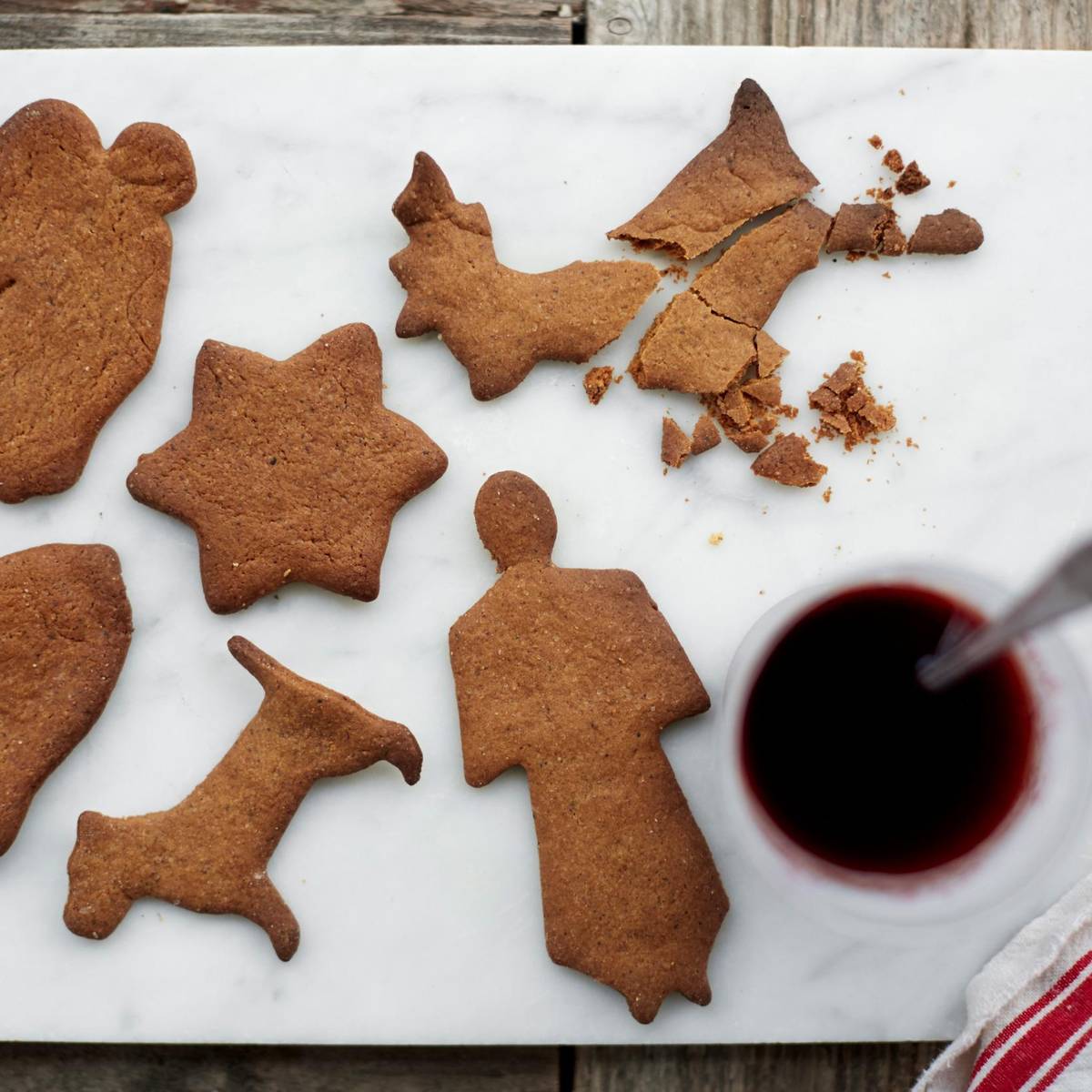
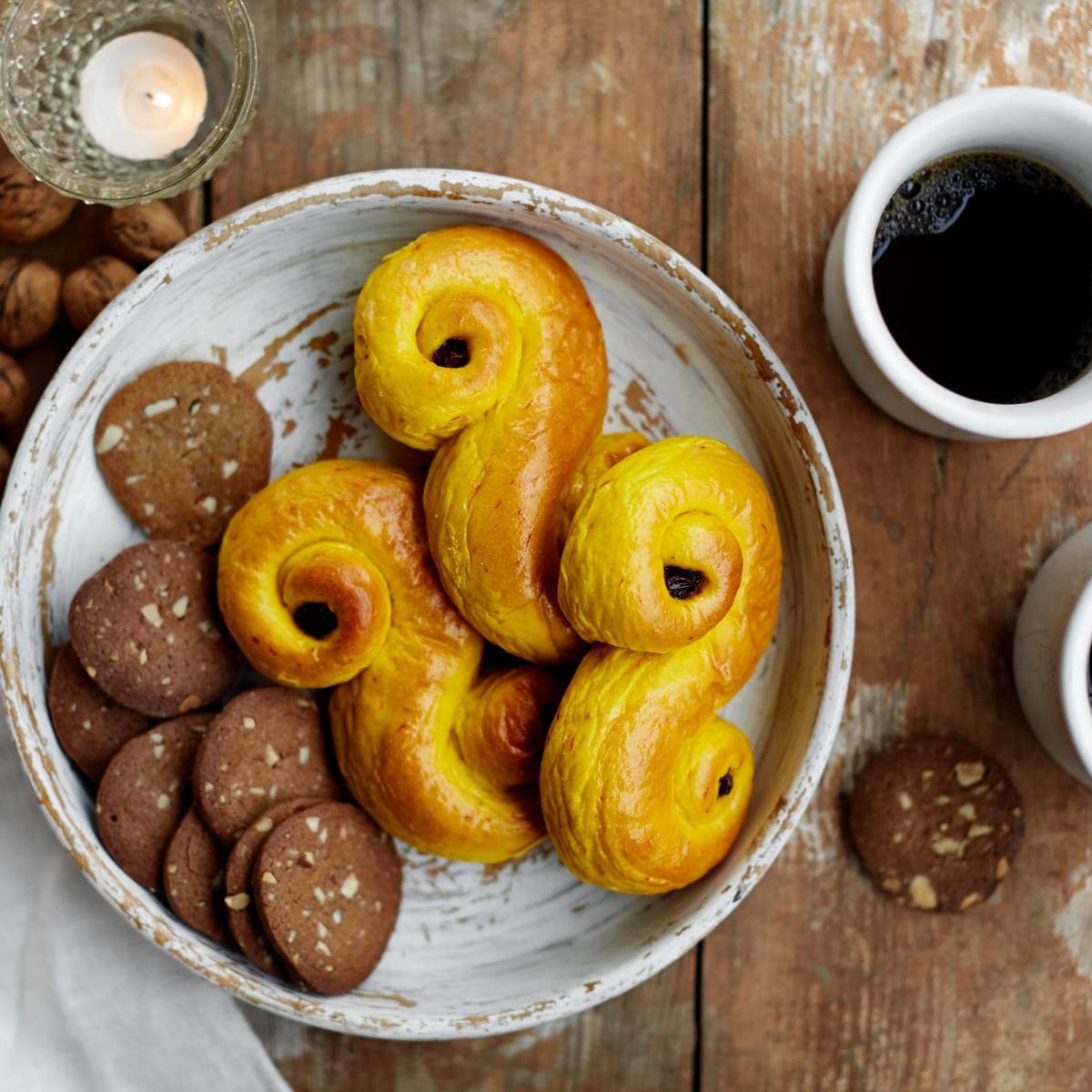
The first sign of Christmas in Sweden usually comes in the shape of food. Christmas Eve may be the main event on the Swedish calendar of festivities, but you'll be able to sample seasonal classics as early as November – think Christmas gingerbread and saffron buns (‘lussekatter’).

The S-shaped ‘lussekatter’ play a particularly important role on 13 December, when Swedes celebrate Lucia Day, a tradition that brings light and song to one of the darkest times of the year. With the country shrouded in darkness, girls and boys wear white gowns and carry candles, singing songs to celebrate Saint Lucia, the bearer of light. Guests are treated to trayfuls of gingerbread cookies and ‘lussekatter’.

These fragrant treats are washed down with Swedish ‘glögg’, a spiced sweet wine served warm. Having tried it, you may want to know where to buy Swedish glögg? Most supermarkets stock alcohol-free versions as well as ready-made spice mixes to take home and add to red wine. The alcoholic version is sold exclusively at Systembolaget, Sweden's dedicated alcoholic drinks retailer.

In recent years, a richer saffron pastry bun called ‘saffransbulle’ has grown in popularity. For a brief period, this almond-filled treat replaces the cinnamon bun ('kanelbulle') as the go-to fika treat in Swedish bakeries and coffee shops. It's a must-try if you visit Sweden in December.

1 / 3

Swedish Christmas fika

During the weeks leading up to Christmas, Swedes gather to enjoy saffron buns ('lussekatter'), a steaming hot drink similar to mulled wine ('glögg') and gingerbread biscuits ('pepparkakor').

Photo: Emelie Asplund/imagebank.sweden.se

/ 3
A table spread with typical Swedish Christmas treats and decorations, mulled wine, nuts, gingerbread cookies, lussebullar and pine twigs.

Swedish Christmas fika

Photo: Emelie Asplund/imagebank.sweden.se

A woman and a child are making a gingerbread house.

Making a gingerbread house

Photo: Robert Daly/Folio

Gingerbread House Exhibition

Gingerbread House Exhibition

Photo: Tuukka Ervasti/imagebank.sweden.se

Christmas gingerbread – in every shape and size

Gingerbread has been enjoyed in Sweden for centuries, but the tradition of building gingerbread houses became popular much later, during the 19th century. The custom is often linked to the Brothers Grimm’s fairy tale Hansel and Gretel, with its tempting house made of sweets.

As for the gingerbread man’s origin, he's believed to have made his first appearance at the court of Elizabeth I of England, who allegedly had cookies baked to resemble important guests. Centuries on, he's come to symbolise Christmas in Sweden and beyond.

In addition to gingerbread cookies – traditionally shaped like hearts, pigs, women and, of course, men – there's a mightier version to consider, namely the gingerbread house ('pepparkakshus' in Swedish). Setting an afternoon aside to craft these edible houses is a seasonal highlight for children and grown-ups alike. Made from the same delicious dough as the cookies, thinly rolled and carefully formed, with all-important decorations that include colourful Swedish sweets and piped icing, used to resemble snow. Make the dough from scratch or buy it ready-made. As for the various parts, there are templates online as well as ready-made gingerbread house kits.

Every year, ArkDes, Sweden’s national centre for architecture and design in Stockholm, hosts a gingerbread house competition and exhibition, showcasing imaginative creations by both amateur and professional bakers. Gingerbread House 2026 runs from 27 November 2026 to 10 January 2027.

1 / 5

Swedish Christmas dinner

The Swedish Christmas buffet is a smorgasbord of different dishes.

Photo: OTW/imagebank.sweden.se

/ 5
A woman preparing Christmas lunch. On the table in front of her are various dishes, copper pots, a lighted candle, oranges, fir twigs and a small Christmas goat.

Swedish Christmas dinner

Photo: OTW/imagebank.sweden.se

Close up of a frying pan with prince sausages next to an advent candlestick with lit candles and a copper pot. Fruits in the background.

Prinskorv

Photo: OTW/imagebank.sweden.se

Janssons frestelse

Janssons frestelse

Photo: OTW

Julskinka

Julskinka

Photo: Helena Wahlman/imagebank.sweden.se

Sill

Sill

Photo: OTW

'Julbord' – the ultimate Christmas smorgasbord

The mere mention of ‘julbord’, translating to ‘Christmas table’, gets Swedes into the holiday spirit. This buffet-style feast is too good to enjoy just once a year, which is why it often features at workplace Christmas parties. Many restaurants and hotels also serve julbord in the weeks leading up to Christmas, often from late November, giving visitors a chance to enjoy this Swedish tradition. Booking ahead is a good idea, especially at weekends. But its most anticipated outing is on Christmas Eve, when families gather around its bountiful display.

The crowning glory of this mainstay is the Christmas ham (‘julskinka’). Cooked and finished with a mustard and breadcrumb glaze, it's presented in its entirety and then sliced and eaten cold, often with a dollop of mustard. Other essentials – several of which were considered luxury foods for Swedish households a couple of centuries back – are Swedish meatballs ('köttbullar'), dry-cured salmon ('gravlax'), short ribs, cocktail sausages ('prinskorv'), potatoes, chopped beetroot salad ('rödbetssallad') and different varieties of pickled herring ('sill'). Many make their own, buying herring in brine and adding spices and sauces.

Another Christmas favourite, added to the table in the 1940s, is Jansson’s temptation (‘Janssons frestelse’), a creamy potato gratin made with onions and Swedish-style pickled sprats. And more recently, today’s julbord increasingly features plant-based options, including meatballs and Christmas ham.

1 / 3

Swedish Christmas buffet

In Sweden, 24 December is the main day for celebrating Christmas, the main family event of the year.

Photo: Carolina Romare/imagebank.sweden.se

/ 3
Swedish Christmas buffet

Swedish Christmas buffet

Photo: Carolina Romare/imagebank.sweden.se

Swedish Christmas dinner

Swedish Christmas dinner

Photo: OTW

Someone holds up a phone to a traditional Christmas smorgasbord.

Merry Christmas

Photo: Plattform/Scandinav

A very Swedish Christmas – good times and treats aplenty

The sweet-toothed have plenty to choose from, including 'Ris à la Malta', a vanilla rice pudding typically served with orange slices. Traditionally, an almond is hidden inside the creamy rice – whoever finds it is said to get married next. A range of homemade sweets is also on the menu – the main ones being 'knäck', a butterscotch toffee with chopped almonds; and 'ischoklad', a melt-in-the-mouth type of chocolate. Both are poured into tiny, colourful cases, making for decorative Christmas displays.

To wash it all down with, there is 'julöl' (dark, seasonal beer) and snaps, although no julbord is complete without ‘julmust’ – an alcohol-free soft drink that tastes like a cross between Coca-Cola and root beer.

From freshly baked gingerbread and saffron buns to the generous Christmas buffet, food is at the heart of the Swedish festive season. And there’s plenty to enjoy, whether you’re visiting in November, December or over Christmas itself.

Article sponsored by

EU and Swedish Board of Agriculture