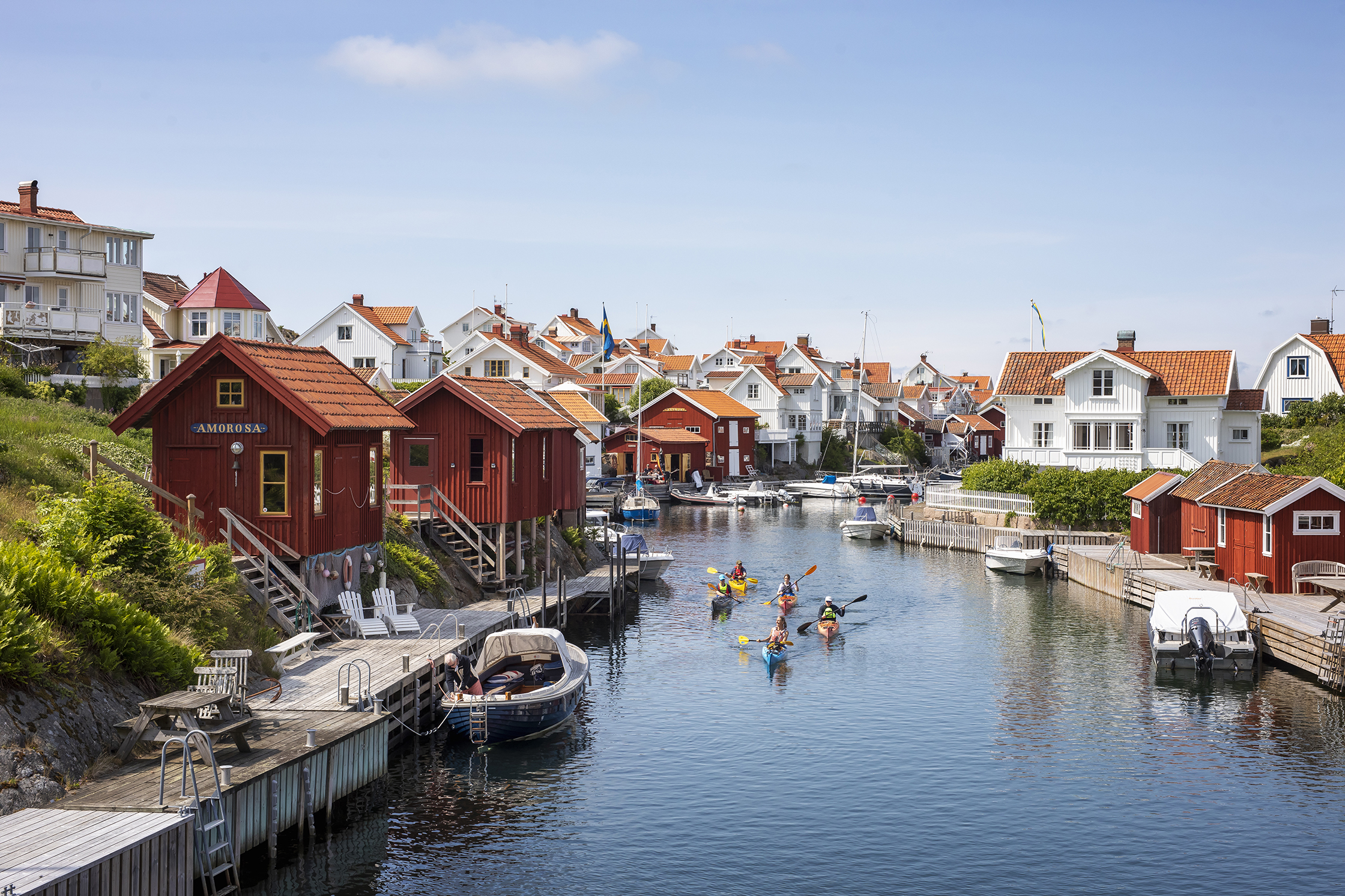
Kayakers paddling through a narrow waterway in Grundsund, surrounded by red boathouses, white wooden houses and moored boats.
Grundsund, West Sweden
Grundsund is one of Bohuslän’s many fishing villages, where red boathouses, narrow waterways and life by the sea shape the landscape.
Photo credit: Carina Gran/westsweden.com

A seafood road trip along Sweden's west coast

All sea breeze, seafood and sun-warmed granite, Sweden's west coast is made for unhurried days, shellfish safaris and generous plates. Distances are short, but the contrasts are big: from foraging seaweed and harvesting oysters to enjoying prawn sandwiches on busy piers and lingering over long dinners in old boathouses.

This coastal road trip links fishing villages, tiny islands and harbourfront dinners, with the sea never more than a few steps away. The full route unfolds over four relaxed days, but the distances are short: most drives take well under an hour, and every stop lies within roughly two to three hours of Gothenburg.

It’s easy to dip in for a single day or follow the route from start to finish. Along the way, you’ll meet the people behind the plates: seaweed guides, shellfish skippers, smokehouse owners and chefs, all turning local catches and coastal ingredients into west coast classics that have shaped everyday life here for generations.

1 / 6

Seaweed safari with Catxalot

The archipelago of West Sweden is full of edible treasures. Get to know the area by participating in a seaweed safari with Catxalot – an adventure that ends with a truly local and sustainable meal.

Photo: Tina Stafrén/imagebank.sweden.se

/ 6
A person in a wetsuit, sitting on a cliff, looking a different types of seaweed. A pair of fins in the foreground.

Seaweed safari with Catxalot

Photo: Tina Stafrén/imagebank.sweden.se

A woman holds a piece of seaweed in her hand as she speak to a group.

Cooking with seaweed

Photo: Tina Stafrén/imagebank.sweden.se

A creamy seafood soup served in a blue bowl at Brygghuset restaurant, set on a wooden table with candlelight.

Soup at Brygghuset, West Sweden

Photo: Madeleine Landley/Westsweden.com

People walking along a cobbled street lined with traditional wooden houses and flowering gardens in Fiskebäckskil.

Fiskebäckskil, West Sweden

Photo: Amplifyphoto/westsweden.com

A basket of cinnamon buns on a table, alongside juice and breakfast items at a hotel dining area.

Strandflickorna, West Sweden

Photo: Amplifyphoto/westsweden.com

Aerial view of Lysekil with coastal houses, a church tower, harbour and surrounding sea in evening light.

Lysekil, West Sweden

Photo: Amplifyphoto/westsweden.com

Day 1 – Grundsund, Fiskebäckskil and Lysekil

From Gothenburg, head north along the coast to Grundsund and start the day with a seaweed-themed experience with Catxalot. This local company specialises in seaweed safaris, coastal foraging, kayak tours, and cooking classes, demonstrating how sustainably harvested seaweed can be used for everything from snacks to main courses. Many workshops end with a simple lunch built around what you’ve gathered from the shoreline – an introduction to one of the west coast’s most distinctive ingredients.

In the afternoon, continue with a ten-minute drive to Fiskebäckskil, an archipelago village set right by the water. Here, book dinner at Brygghuset, a harbourside restaurant with a menu centred on fish and shellfish. A popular choice is the saffron-infused fish-and-mussel soup. After dinner, take the car ferry across to Lysekil. The crossing takes around 15 minutes and runs year-round between the two communities.

Spend the night at Strandflickorna in Lysekil, a turn-of-the-century seaside villa overlooking the Gullmar Fjord. This small hotel and B&B offers individually decorated rooms and sea cabins, just a short stroll from the harbour and coastal walking paths. Dogs are welcome, making it a convenient base for travellers exploring the coast.

1 / 6

Smögen, Bohuslän

Walk along the iconic pier in Smögen and inhale the fresh air from the sea.

Photo: Åsa Dahlgren/Westsweden.com

/ 6
A coastline of fishing huts in bright colors and boats docked along the jetty.

Smögen, Bohuslän

Photo: Åsa Dahlgren/Westsweden.com

A seafood dish served in a white bowl at Skärets Krog, with a glass of white wine on a restaurant table.

Skärets Krog, Smögen

Photo: Thomas Lotter/westsweden.com

A harbour area with boats, cliffs and buildings.

Fjällbacka, West Sweden

Photo: Per Pixel Petersson/imagebank.sweden.se

A large bowl filled with shellfish, served at Stora Hotellet in Fjällbacka.

Seafood at Stora Hotellet

Photo: Madeleine Landley/ Westsweden.com

Everts Sjöbod in Grebbestad, a waterside boathouse hotel with wooden jetties, boats and outdoor seating by the sea.

Everts Sjöbod, West Sweden

Photo: Alex Vizeo Loris Monteux/Westsweden.com

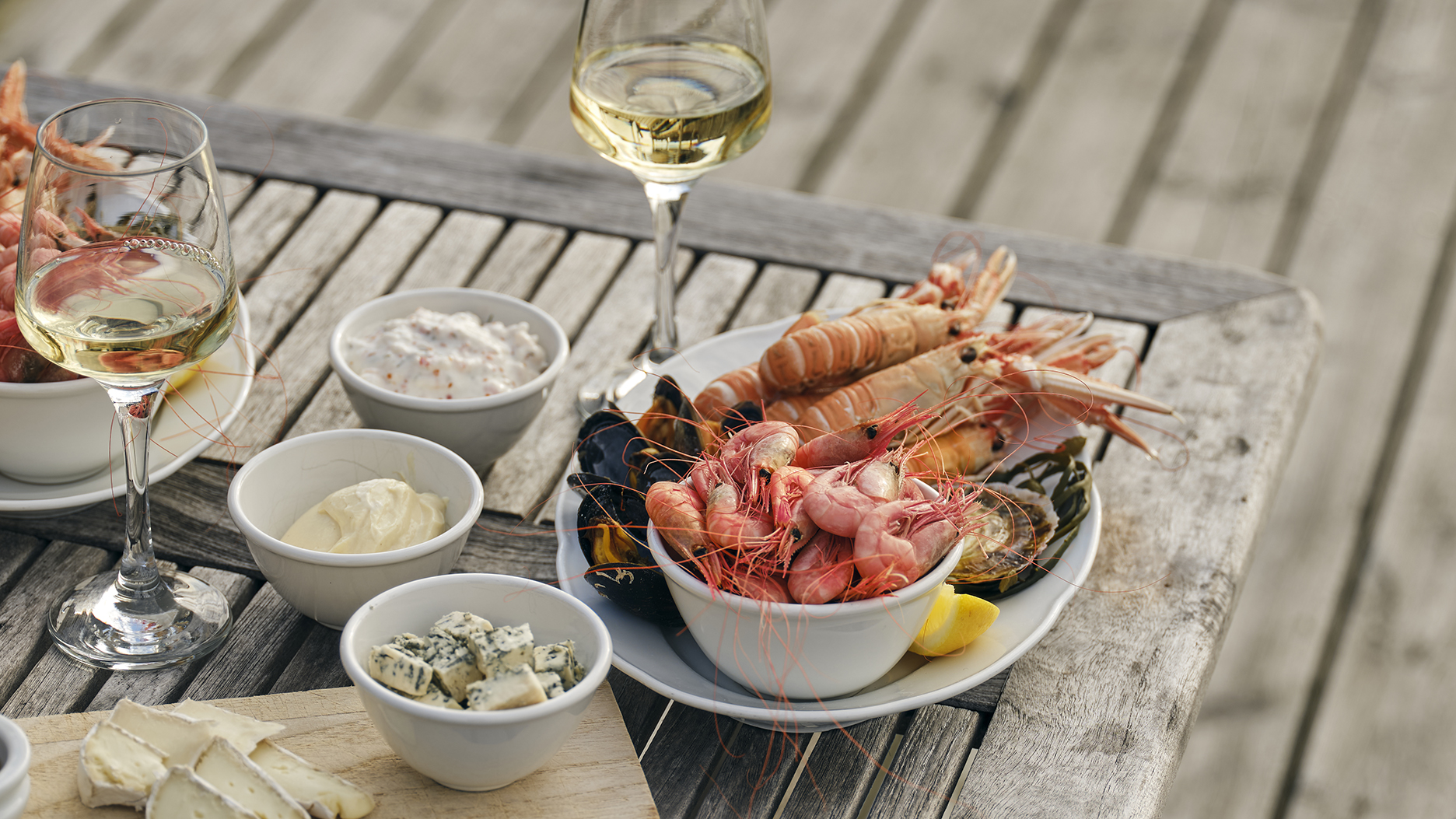
A seafood platter with prawns, langoustines, mussels and dipping sauces served outdoors at Everts Sjöbod in Grebbestad.

Dinner at Everts Sjöbod

Photo: Badass Food Stories/westsweden.com

Day 2 – Smögen, Fjällbacka and Grebbestad

After breakfast, continue north along the coast for a day of seafood, fishing villages and waterside stays.

After about an hour’s drive, you'll reach Smögen, where the long wooden pier is lined with colourful boathouses, shops and cafés. At the entrance sits Skärets Krog, known for its west coast take on classic seafood dishes and its generously topped prawn sandwiches. Find a table overlooking the harbour and settle in for lunch before continuing north.

After lunch, follow the smaller coastal roads via Hamburgsund to Fjällbacka. The drive takes less than an hour and passes some of Bohuslän’s characteristic coastal scenery, with red boathouses, narrow sounds and smooth granite cliffs. In Fjällbacka, book dinner at Stora Hotellet, a 19th-century waterfront hotel with three restaurants led by acclaimed chef Thomas Sjögren. Fish and shellfish feature prominently on the menus, alongside views across the harbour.

For a more relaxed alternative, continue ten minutes north to Grebbestad and Everts Sjöbod, where a handful of rooms are housed beside a traditional boathouse at the water’s edge. The on-site restaurant focuses on local shellfish and seafood, making it easy to settle in for the evening without going any further. Enjoy dinner by the harbour before turning in for the night just a few steps away.

1 / 6

Oyster kit

Grebbestad oysters carry a PDO (Protected Designation of Origin) status, an EU quality label.

Photo: Madeleine Landley

/ 6
Oyster kit

Oyster kit

Photo: Madeleine Landley

A restaurant in a small building but with a tower on top. On the top is a clock. The house is white with green roof.

Musselbaren, West Sweden

Photo: Tina Stafrén/VisitSweden

A guide hauling mussels aboard a boat during a mussel farm tour off Sweden’s west coast, with visitors watching nearby.

Guided tour with Musselbaren

Photo: Jonas Ingman/westsweden.com

A small village with all white houses on the coast.

Klädesholmen, West Sweden

Photo: Emelie Asplund/Imagebank.sweden.se

A plated seafood dish served outdoors at Salt & Sill, with drinks and other dishes on a sunlit table by the water.

Seafood at Salt & Sill

Photo: Amplifyphoto/Westsweden.com

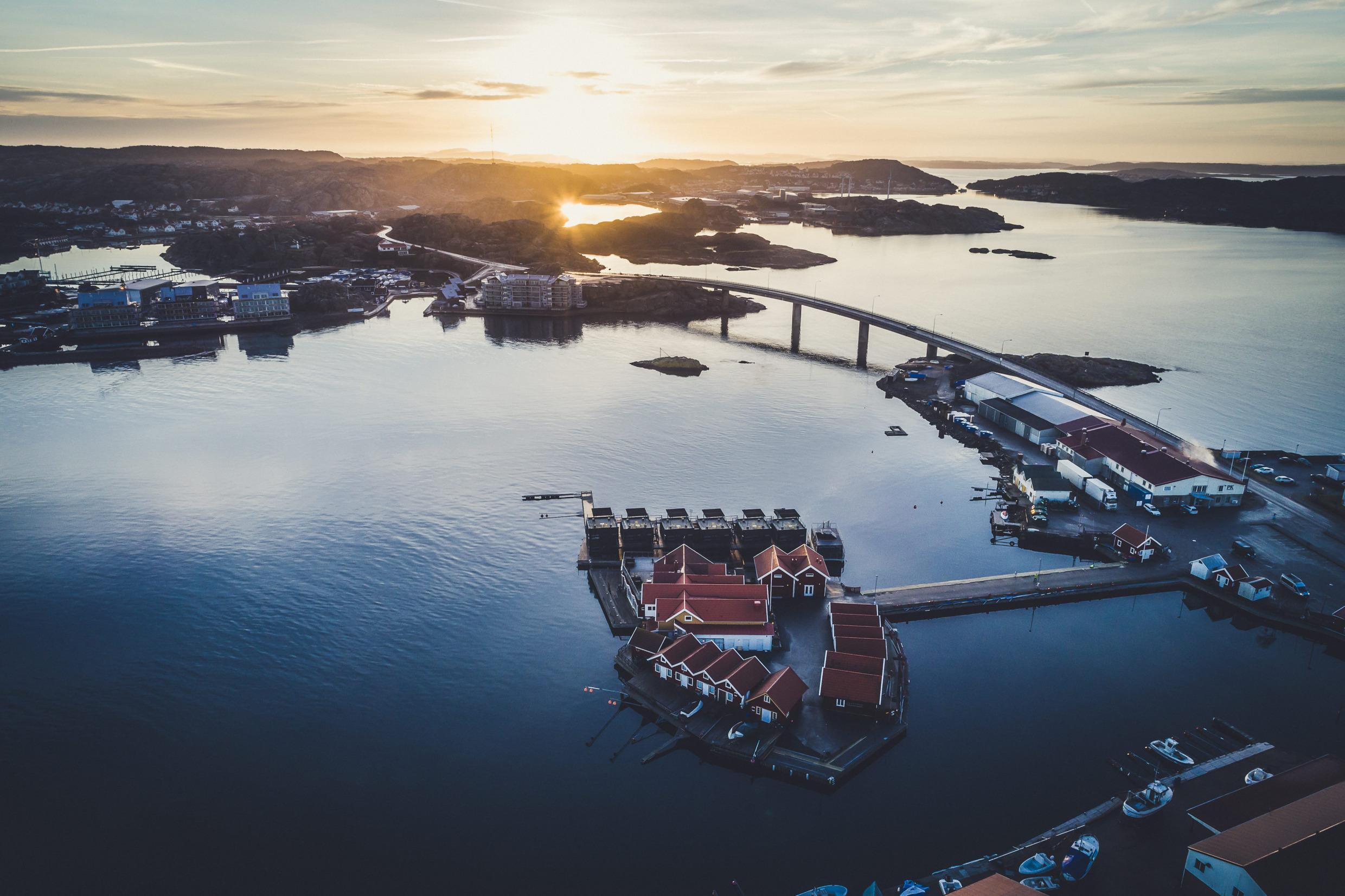
Aerial view of the floating hotel and restaurant Salt & Sill and surrounding area in West Sweden's archipelago.

Salt & Sill, West Sweden

Photo: Tony Meyer/Westsweden.com

Day 3 – Grebbestad, Ljungskile and Klädesholmen

Morning in Grebbestad means waking up in Sweden’s oyster capital. Around 90 per cent of the country’s oysters are harvested along this stretch of coast, and Grebbestad oysters carry PDO (Protected Designation of Origin) status. Join Klemmings Ostron for an oyster-fishing trip through the archipelago to their natural oyster beds, followed by a lunch featuring the day’s catch and other local ingredients.

Continue south to Ljungskile, a fjord-side town known for its coastal walking trails and views across the water. At Musselbaren, sustainably farmed Bohuslän blue mussels – which also carry PDO status – take centre stage. The menu features everything from steamed mussels to mussel risotto and moules frites. From April to October, visitors can also join guided trips out to the mussel farms.

After a day shaped by the coast’s shellfish traditions, continue south-west to the island of Tjörn and Klädesholmen, a fishing community with roots dating back to the 16th century. Check in at Salt & Sill, Sweden’s first floating hotel, where rooms are set directly above the water with views across the Bohuslän archipelago. The restaurant specialises in west coast seafood and herring, reflecting Klädesholmen’s long connection to the herring trade.

1 / 4

Åstol, Sweden's west coast

Sweden is largely surrounded by ocean and has vast archipelagos on both the east and west coasts.

Photo: Emelie Asplund/Imagebank.sweden.se

/ 4
An island with houses in one of Sweden's archipelagos.

Åstol, Sweden's west coast

Photo: Emelie Asplund/Imagebank.sweden.se

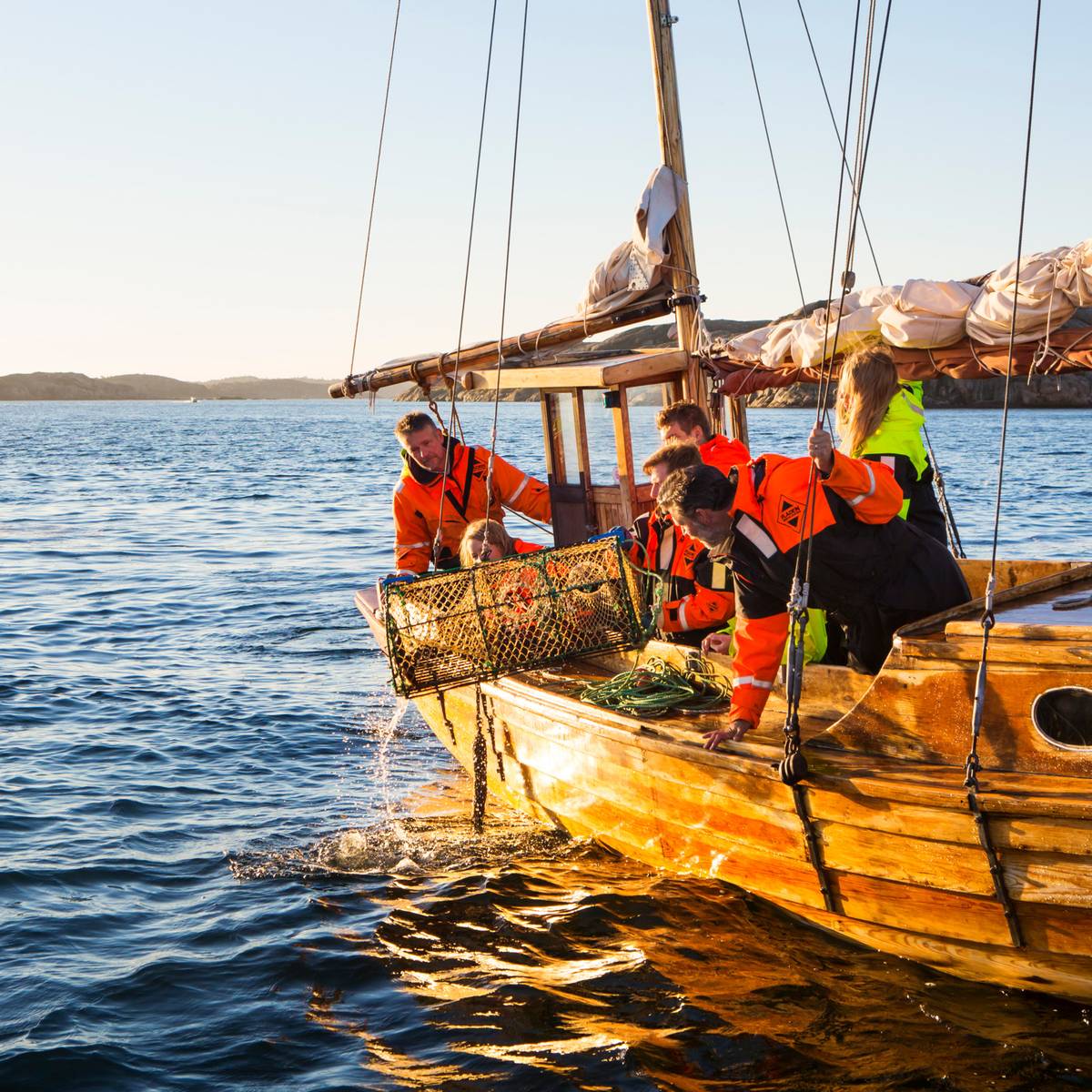
A group of people stand on a fishing boat and watch a person pull up a lobster trap.

Lobster safari

Photo: Roger Borgelid/imagebank.sweden.se

Feskekörka fish market in Gothenburg, seen from across the water on a sunny day, with outdoor terraces and people dining by the waterfront.

Feskekörka in Gothenburg

Photo: Peter Kvarnström/Göteborg & Co

A display of fresh shellfish, including prawns and langoustines, arranged on ice with lemons and seafood garnishes.

Seafood from West Sweden

Photo: Tina Stafrén/imagebank.sweden.se

Day 4 – Åstol and back to Gothenburg

No seafood journey along Sweden’s west coast would be complete without a stop at one of the region’s traditional smokehouses. From Klädesholmen, continue to Åstol, a small car-free island clustered around a harbour of wooden boathouses. Leave the car behind and take the passenger ferry across to the island, where Åstols Rökeri has been serving smoked fish and seafood for generations. The menu varies with the catch, but smoked prawns, seafood platters and daily specials are regular features. Enjoy lunch overlooking the sea before exploring Åstol’s narrow lanes and rocky shoreline.

Afterwards, take the ferry back and continue towards Gothenburg.

Back in Gothenburg

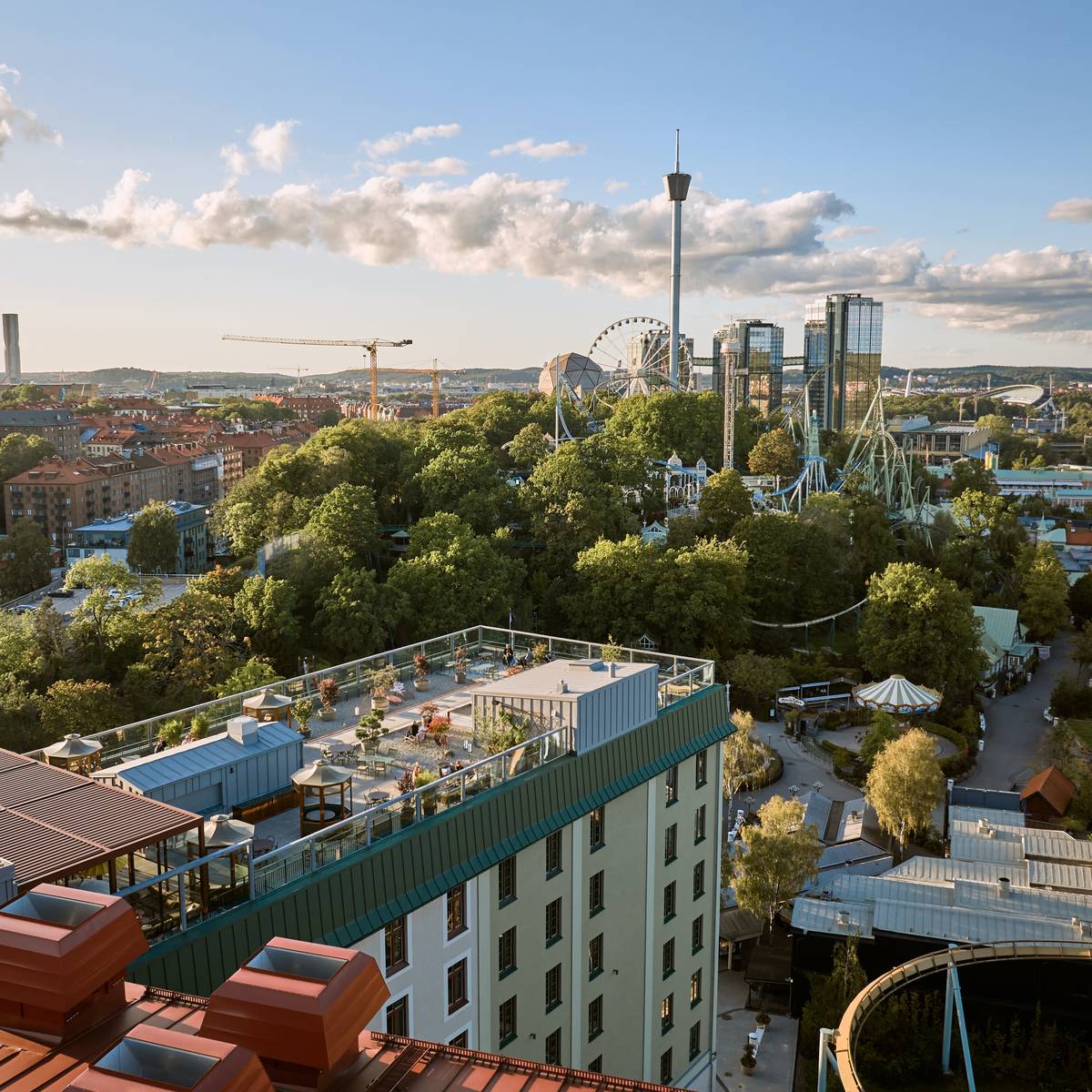
If time allows, round off the trip at Feskekörka, Gothenburg’s historic fish and seafood market. Recently renovated, it brings together fishmongers, restaurants and seafood specialists under one roof. Åstols Rökeri also has a small outpost here, offering one last taste of Sweden’s west coast before the journey ends.