Hiking in Sweden – all you need to know
Planning a hiking trip? Discover hiking in Sweden, from accessible hiking trails to longer routes, with practical tips and useful information before you go.
Last updated 31 March 2026


Planning a hiking trip? Discover hiking in Sweden, from accessible hiking trails to longer routes, with practical tips and useful information before you go.
Experience the tranquility of winter hiking in Sweden, where crisp air and snow-covered paths create the perfect setting for outdoor adventures.
Photo: Hilla Aspman/imagebank.sweden.se
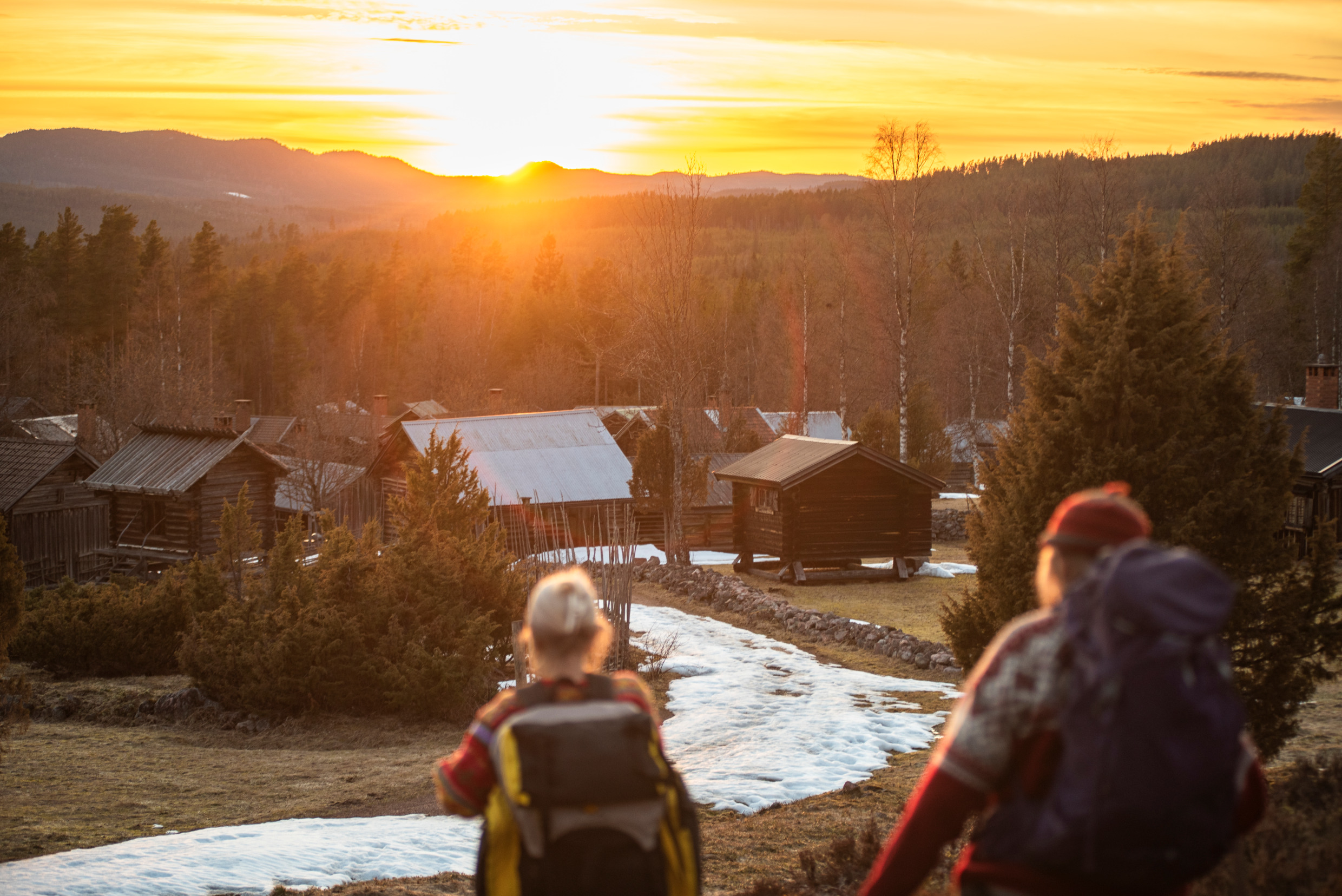
Photo: Hilla Aspman/imagebank.sweden.se
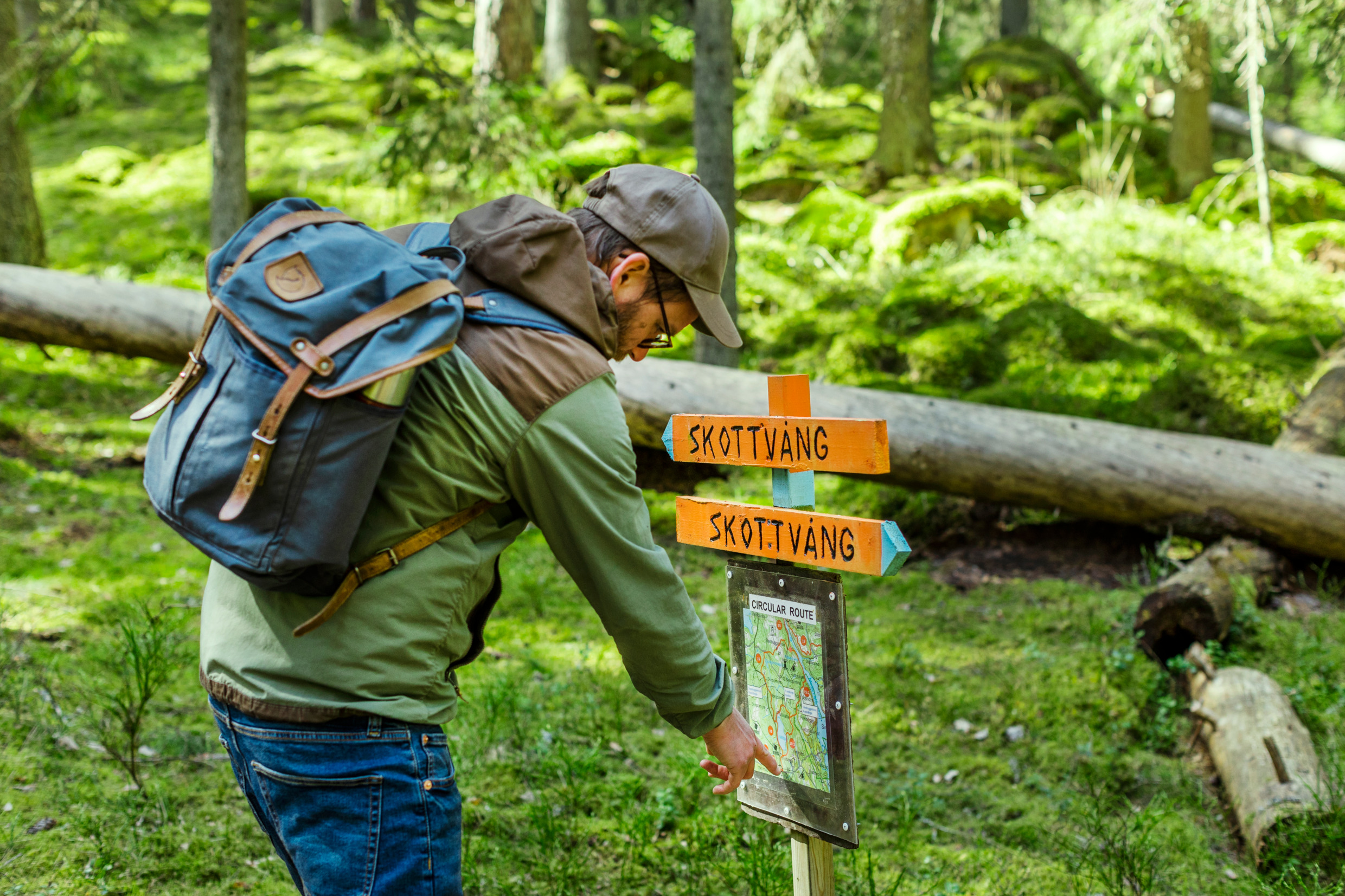
Photo: Lina Östling/imagebank.sweden.se
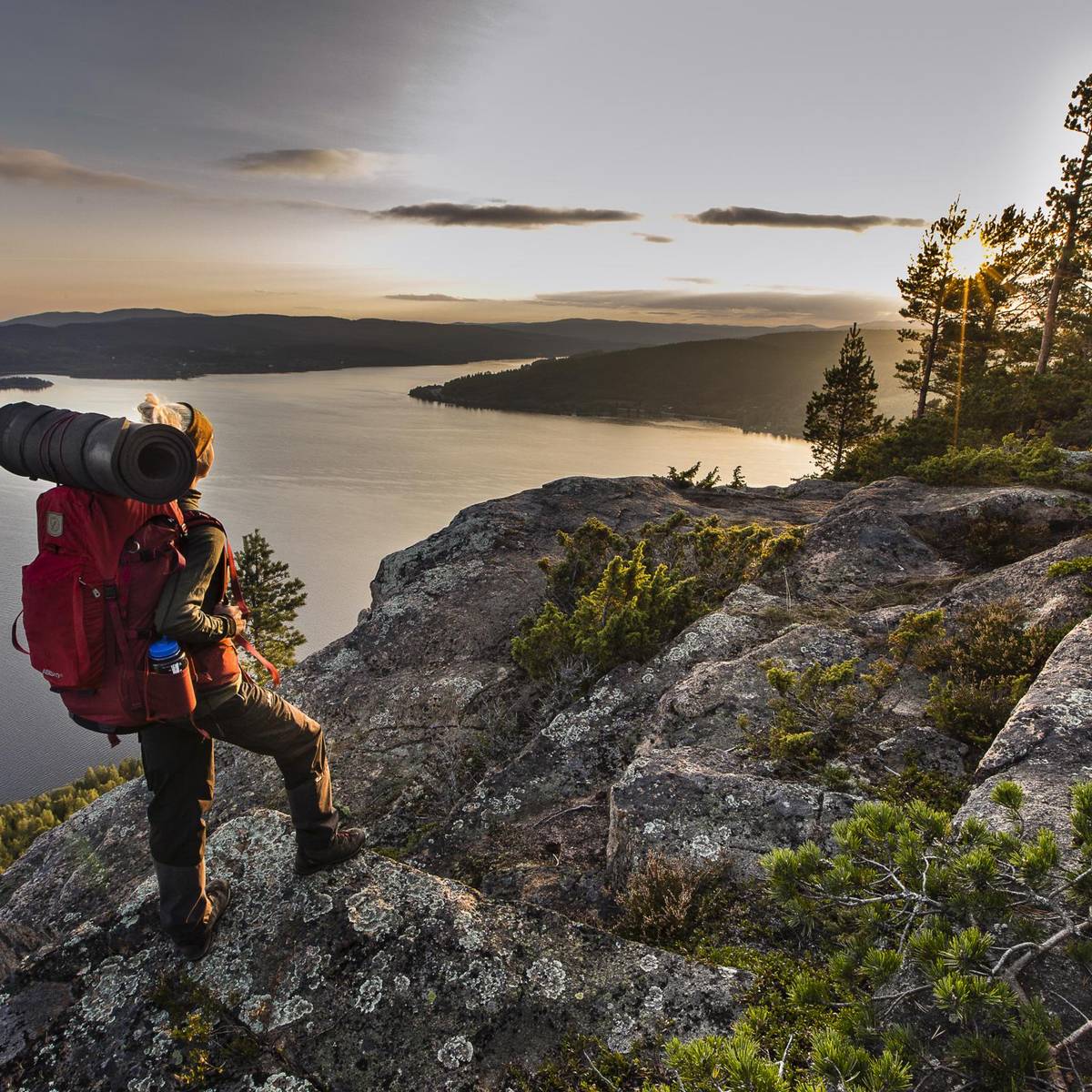
Stretching almost 1,600 kilometres from south to north, Sweden offers a remarkable variety of landscapes. From coastal paths and archipelago trails to ancient forests and mountain ranges, there’s a wide range of hiking experiences to discover. Add to that 31 national parks, one of Europe’s longest coastlines and the fact that almost 70 per cent of the country is covered in forest, and it’s easy to see why your next hike is never far away. Many trails are also easily accessible, often with starting points close to towns and public transport.
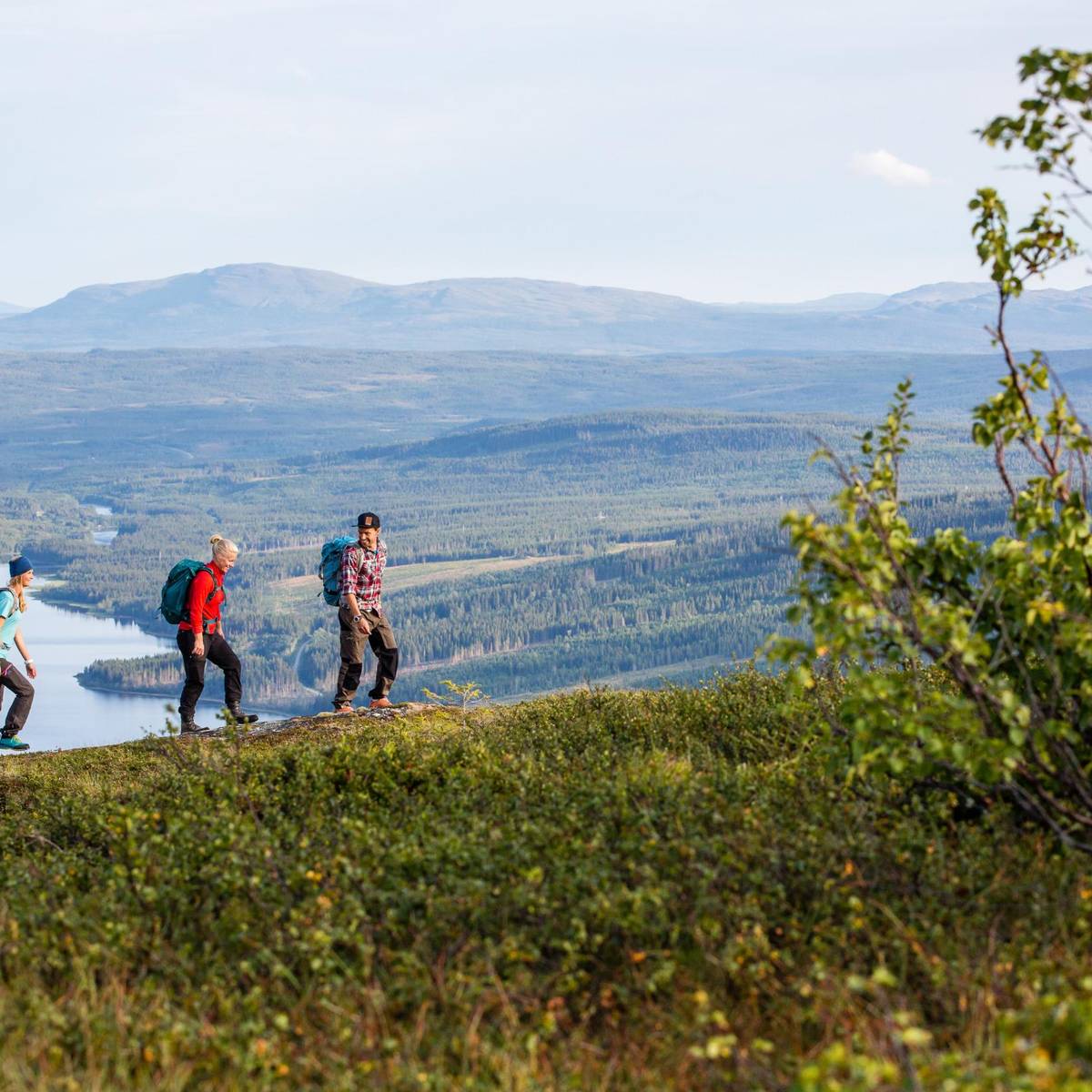
Whether you’re planning a short circular walk or a multi-day adventure, Sweden’s hiking trails are designed to suit different levels. Long-distance routes are often divided into sections, making them just as suitable for day hikes. Trails are generally well-maintained and clearly marked, with features such as boardwalks over wetlands to make walking easier. All in all, hiking in Sweden is accessible to most people.
The hiking season in Sweden varies depending on where you go. In the south, trails are often accessible year-round, while the mountain regions in the north are typically best visited from June to September.
Spring can be a beautiful but unpredictable time to hike, with lingering snow in the north and wet trails in many areas. It’s also a great time for a waterfall hike, as spring floods make them particularly powerful.
Summer is the most popular time for hiking in Sweden, especially in the mountains. Expect long days, and in the far north, the Midnight Sun. Do note that mosquitoes can be present, particularly in northern and inland areas.
Autumn brings cooler temperatures with fewer mosquitoes, crisp air and colourful foliage. It’s also a great time for berry and mushroom picking along the trails.
Winter hiking is possible in some areas, often in the form of snowshoeing or guided tours, but requires proper equipment and experience.
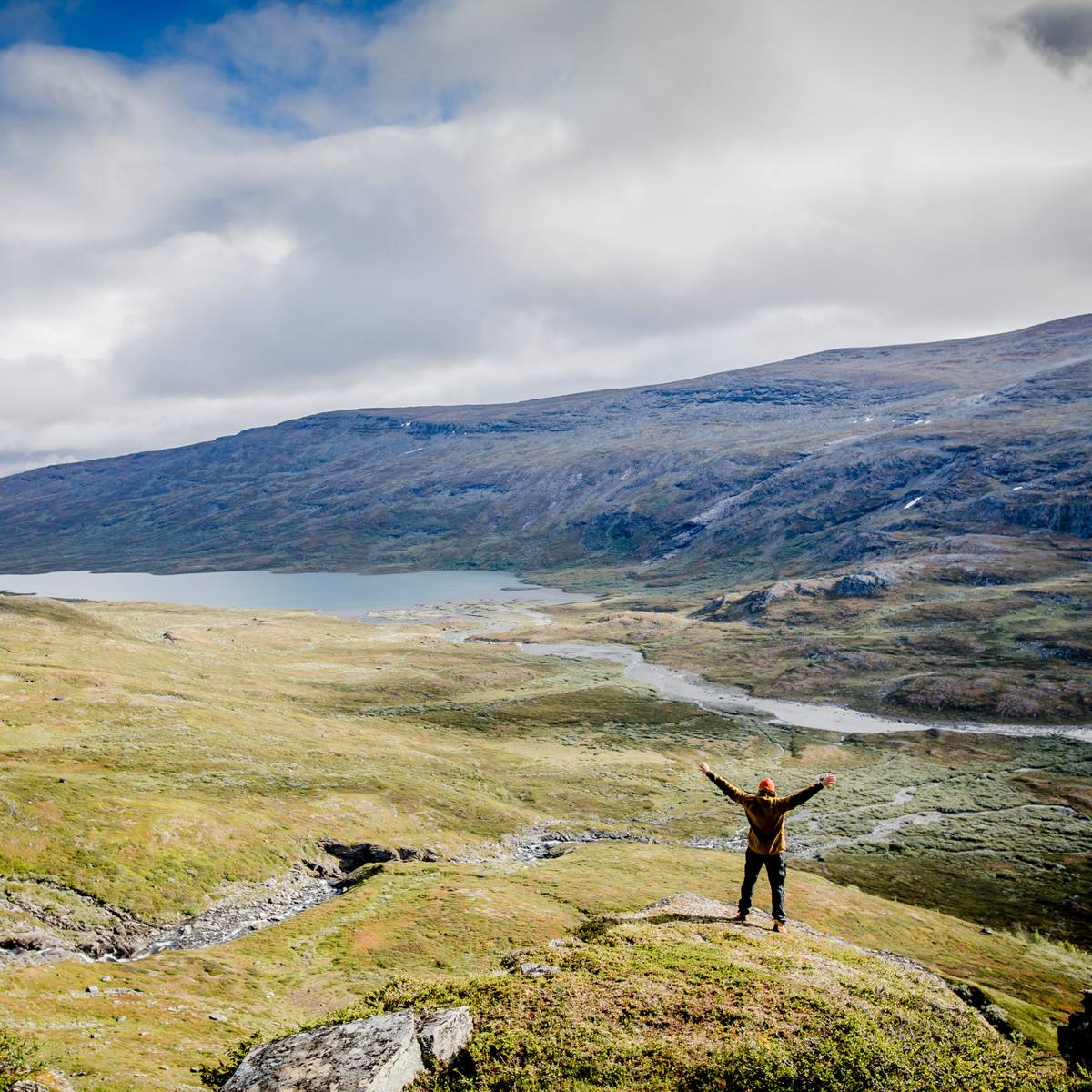
Hiking and camping in the Swedish mountains, surrounded by wide-open landscapes.
Photo: Tomas Utsi/imagebank.sweden.se
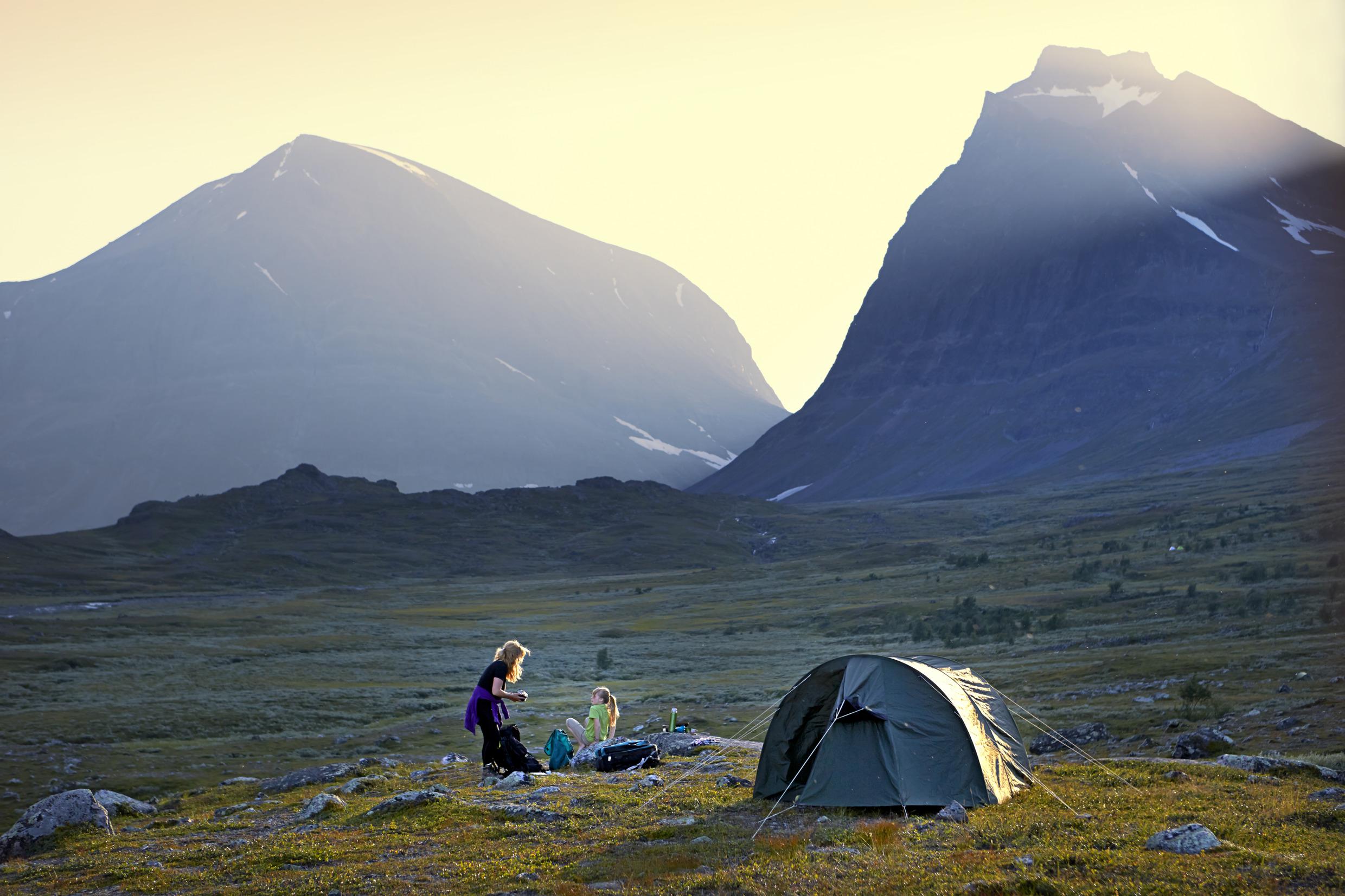
Photo: Tomas Utsi/imagebank.sweden.se

Photo: Martin Edström/Visit Sweden
Packing for a hike is about being prepared without carrying more than you need. Weather conditions in Sweden can change quickly, especially in the mountains, so it’s important to be well prepared for changing conditions. Dressing in layers makes it easier to adapt to shifts in temperature, from sunshine to rain, and even snow. The Swedish Tourist Association (STF) offers detailed packing lists for different types of hikes.
Essentials to bring:
When hiking in Sweden, there are plenty of ways to stay close to nature, whether you prefer to travel light or carry your own gear.
The Swedish Tourist Association (STF) offers a wide network of mountain huts and hostels, particularly along popular long-distance trails. Many are staffed during the hiking season, while others are self-service or unstaffed cabins. During the summer months, it’s a good idea to book in advance, especially along popular routes.
Simple wind shelters (‘vindskydd’) can be found along many trails and are free to use for a night’s rest. For more flexibility, camping is allowed in most places under the Right of Public Access (‘allemansrätten’), as long as you follow the rules and show consideration for nature and landowners.
If you prefer more comfort, hotels, guesthouses and B&Bs are often available in nearby towns and villages, especially along well-established routes.
The Right of Public Access (‘allemansrätten’) gives you the freedom to roam almost anywhere in nature – whether you’re hiking, camping or simply exploring the outdoors. This unique right also comes with responsibilities: respect wildlife, avoid disturbing others and leave no trace. Read more about how it works and what to keep in mind.
The popular destination Kinnekulle Grand Quarry in West Sweden is 40 meters deep and has its lowest layers of limestones from 400 million years ago.
Photo: Shauto/imagebank.sweden.se

Photo: Shauto/imagebank.sweden.se
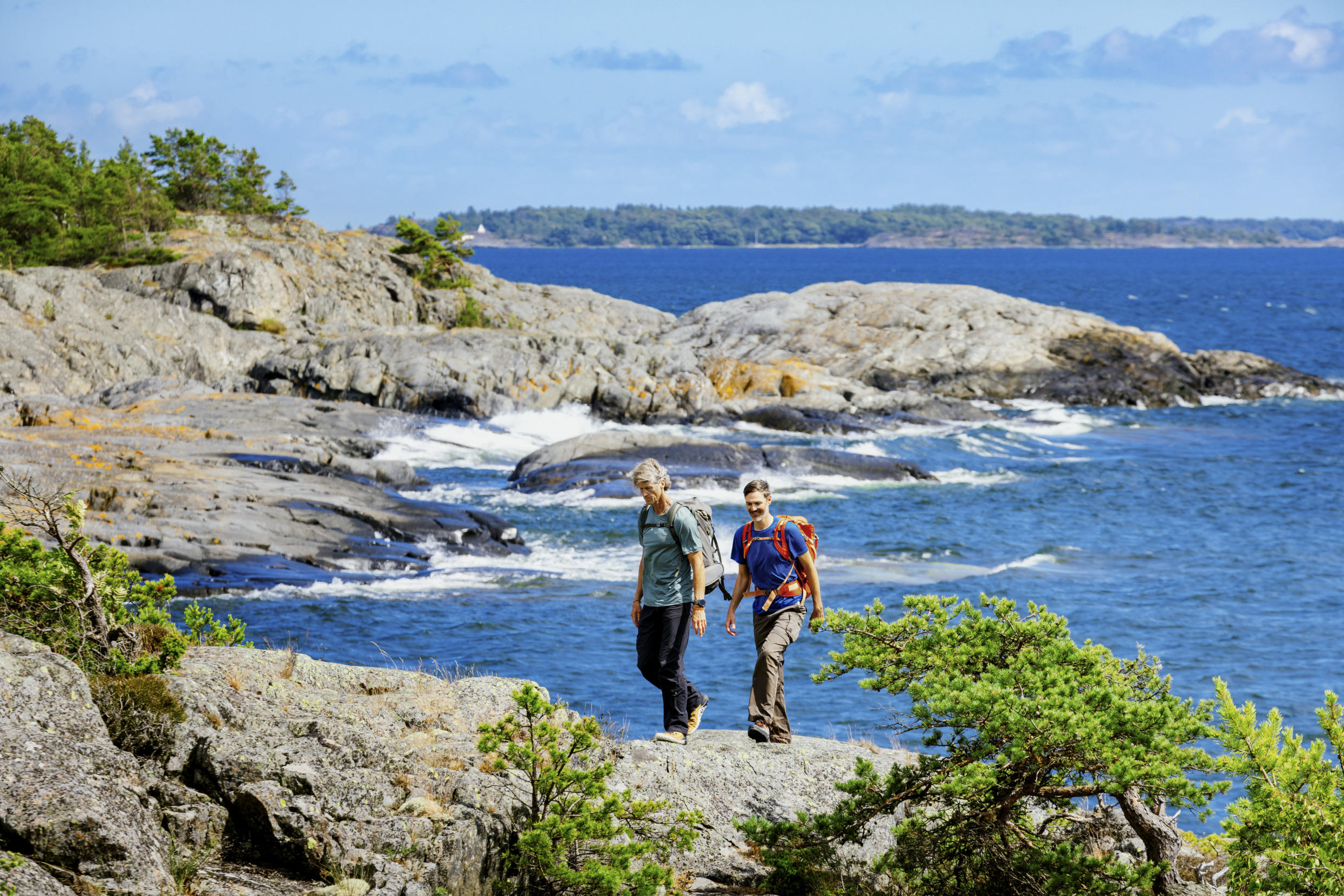
Photo: Roger Borgelid/Visit Sweden
Sweden offers a wide variety of hiking trails, making it easy to find a route that suits your interests and experience level.
The Swedish Tourist Association’s signature trails are a great starting point. Spread across the country, these well-maintained routes showcase some of Sweden’s most scenic landscapes and are often divided into sections, making them easy to adapt to your plans.
If you prefer to travel by train, you can hike straight from the station on many routes. Discover options in our guide to train-to-trail hiking. You can also explore our selection of Sweden’s top hiking trails – from short walks to multi-day adventures.
You can also easily find trails with different accessibility features. On Naturkartan, it’s possible to filter routes by criteria such as proximity to public transport, parking or toilets, as well as trails adapted for wheelchairs, strollers or visitors with visual impairments. In West Sweden, you’ll also find a dedicated digital guide to accessible hiking trails in the region.
Naturkartan is a helpful tool for finding hiking trails, guides and downloadable GPX files across Sweden.
The Swedish Tourist Association (STF) also provides inspiration, practical information on trails and accommodation, and useful hiking advice.
For more detailed navigation, topographic maps are available via Lantmäteriet, Sweden’s mapping authority, and can be downloaded for offline use.