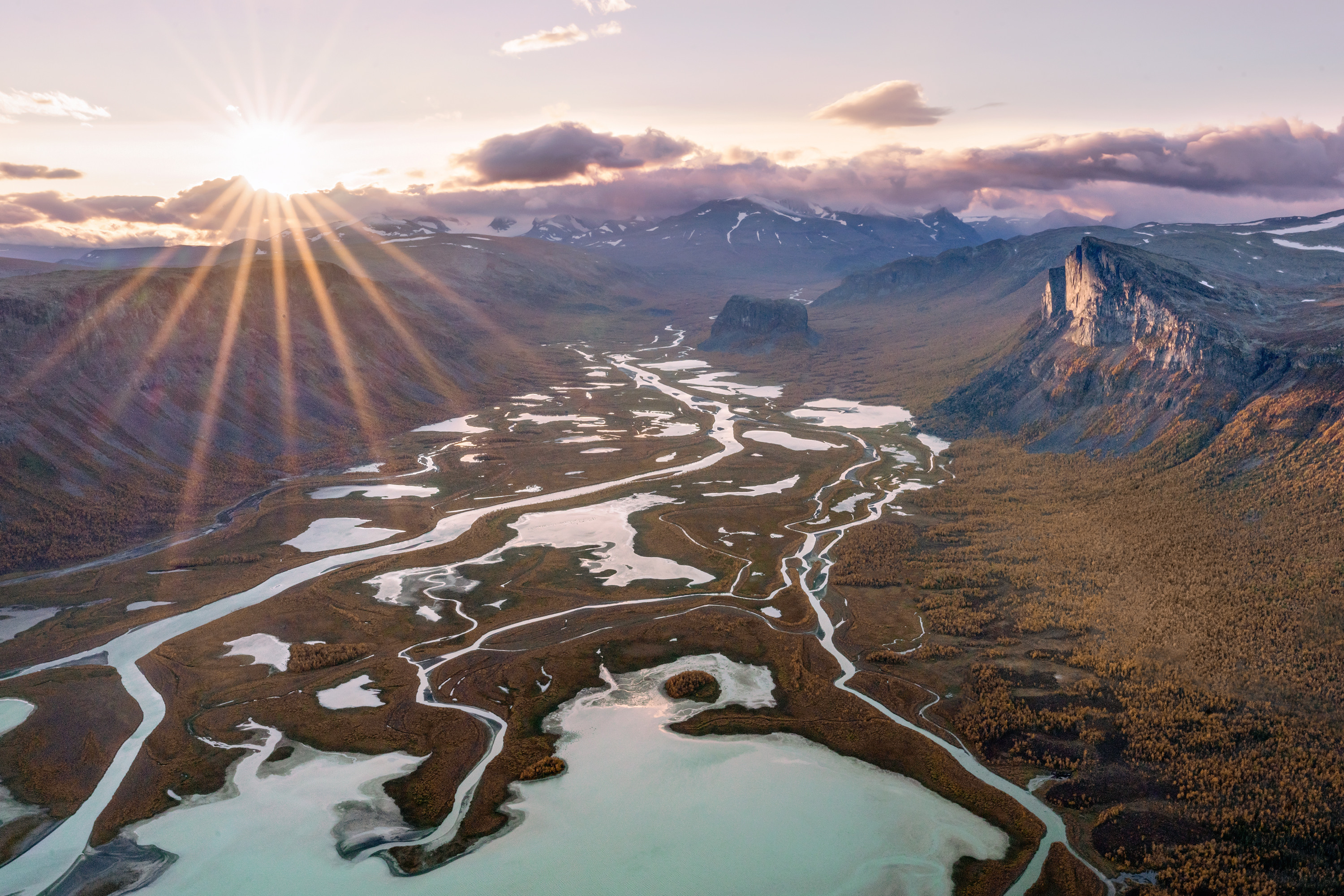
Sunlight breaks through the clouds over a vast mountain valley where braided rivers wind between wetlands and towering peaks.
Rapa Valley (Rapadalen) in Sarek National Park
The winding waterways of Rapadalen in Sarek National Park, part of the Laponia UNESCO World Heritage Site.
Photo credit: Magnus Winbjörk/Swedish Lapland

Hike the Heritage: 3 UNESCO Adventures in Sweden

One more step... And another. Your dust-covered boots feel a bit tight. Your backpack creaks in time with your steps. Then you lift your gaze. There it is: nature, in all its quiet drama. You are right in the middle of it all, in the heart of this extraordinary Swedish landscape! Welcome to Hike the Heritage!

Sweden is home to 15 UNESCO World Heritage Sites, which are recognised for their outstanding cultural or natural significance. Several of these sites are extraordinary places to explore on foot. This guide will take you to three of these sites where hiking is one of the best ways to experience the landscape: Laponia, the High Coast (Höga Kusten), and Southern Öland. Each site offers a unique perspective on Sweden's natural beauty, ranging from Arctic mountains and dramatic coastal scenery to distinctive agricultural landscapes that have been shaped over thousands of years.

Did you know?

Laponia is one of the world's largest unspoilt natural areas. It is recognised for its outstanding Arctic landscapes and the living cultural traditions of the Sámi people.

The High Coast is home to the world's highest recorded post-glacial land uplift. Since the last Ice Age, the land has risen by almost 300 metres, and it continues to rise today.

The southern part of Öland is home to an exceptional agricultural landscape. People have adapted to the island's unique limestone environment here for millennia.

1 / 3

Hiking, Artic Sweden

Did you know? Many mountain streams in Arctic Sweden are known for their exceptionally clean water, though it's always wise to check local conditions before drinking directly from nature.

Photo: Mattias Fredriksson/Visit Sweden

/ 3
Two people are drinking from a river in Swedish Lapland.

Hiking, Artic Sweden

Photo: Mattias Fredriksson/Visit Sweden

A hiker with a backpack standing on a cliff overlooking dense forest and the sea in the High Coast region of northern Sweden.

Hiking the High Coast

Photo: Höga Kusten Destinationsutveckling

An old-fashioned wooden windmill on a field in Öland.

Öland

Photo: Tina Stafrén/imagebank.sweden.se

Which UNESCO hike would suit me?

One of the greatest joys of hiking in Sweden is how easily you can immerse yourself in nature. Whether you're looking for a gentle coastal stroll, a fulfilling day hike, or an extended mountain expedition, there are trails to suit all abilities. The best time to go depends on your destination. Spanning over 1,500 kilometres from north to south, Sweden's landscapes and seasons vary greatly, meaning every region has its own ideal hiking season.

Hike in Laponia – Arctic nature and Sámi culture

Laponia is one of Europe's largest protected natural areas and a UNESCO World Heritage Site. It lies above the Arctic Circle. Recognised for its exceptional natural and cultural values, the landscape has been shaped by the living traditions of the Sámi culture and reindeer husbandry for thousands of years.

Laponia is the perfect destination for hikers seeking vast mountain landscapes and multi-day adventures in stunning natural surroundings. Trails lead across open fells, through birch forests, and alongside glacial rivers, offering sweeping vistas and a sense of space that is hard to find elsewhere in Europe. You may even spot reindeer grazing or golden eagles soaring overhead along the way.

When to go hiking:

Summer in Laponia is the classic hiking season, when the mountain trails open beneath the midnight sun. In winter, Laponia transforms into a true Arctic landscape, which is perfect for experienced adventurers interested in ski touring, snowmobiling or dog sledding. However, weather conditions can change rapidly at any time of year, so careful planning and local knowledge are essential.

Where to stay:

These cabins have a low environmental impact and allow hikers to stay in remote areas. Mobile coverage is limited, so make sure you plan your route before setting out. You can also choose to camp.

Stora Sjöfallet Mountain Lodge is an easily accessible mountain guesthouse and perfect for those who want to experience an authentic yet comfortable mountain holiday. It is located in the World Heritage Site. The nearby towns of Jokkmokk and Gällivare offer a wider range of accommodation, restaurants and visitor services.

Things to do:

Laponia invites you to experience the Arctic year-round through activities such as guided hikes, Sámi cultural experiences, canoeing, fishing, and wildlife encounters. In winter, the landscape becomes a playground for activities including dog sledding, cross-country skiing, snowmobiling and Northern Lights adventures.

For more inspiration and practical information about hiking in Laponia and across Arctic Sweden, visit the official tourism website of the region, Swedish Lapland www.swedishlapland.com.

1 / 7

Laddjujavre, Arctic Sweden

Láddjujávri, surrounded by dramatic mountain peaks in Laponia, Arctic Sweden.

Photo: Magnus Winbjörk/ Swedish Lapland

/ 7
A turquoise mountain lake lies beneath steep, rugged peaks with patches of snow, as low clouds drift between the mountains in Laponia.

Laddjujavre, Arctic Sweden

Photo: Magnus Winbjörk/ Swedish Lapland

A modern wooden visitor centre stands beside a boardwalk overlooking colourful autumn vegetation, a lake and snow-dusted mountains.

Naturum Laponia

Photo: Ted Logart/Swedish Lapland

Snow-covered mountains are partially veiled by clouds glowing pink in the Arctic winter light.

Áhkká in Laponia

Photo: Magnus Winbjörk/Swedish Lapland

Camping in Laponia

Camping in Laponia

Photo: Magnus Winbjörk/Swedish Lapland

A small red cabin stands in an open alpine landscape, framed by rocky mountain slopes and wide northern skies.

A remote mountain cabin nestled in the vast landscapes of Laponia.

Photo: Ted Logart/Swedish Lapland

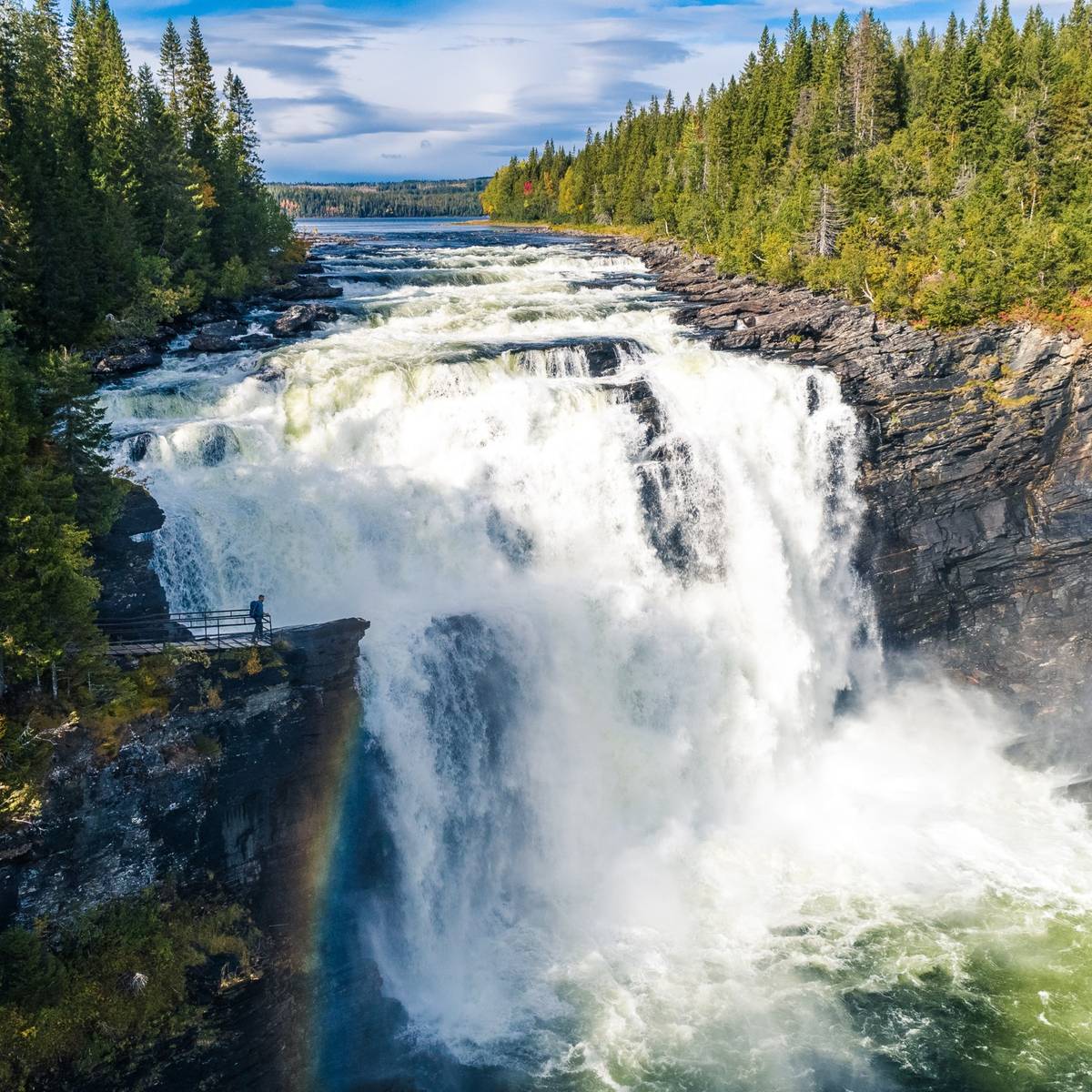
The Rapa Valley in Sarek National Park

The Rapa Valley in Sarek National Park

Photo: Fredrik Schlyter/imagebank.sweden.se

In a snow-covered winter landscape, a reindeer stands in front of a sleigh.

The Sami people

Photo: Asaf Kliger/imagebank.sweden.se

Hike the High Coast – Discover Sweden's dramatic coastline

The High Coast is one of Sweden's most spectacular hiking destinations. Together with Finland's Kvarken Archipelago, it forms a UNESCO World Heritage Site, where the land continues to rise after the last Ice Age. The result is a striking landscape of steep cliffs, smooth granite hills, rocky shores and dense forests overlooking the Gulf of Bothnia.

Choose the High Coast if you enjoy varied day hikes with rewarding viewpoints. The trails climb through forests to rocky hilltops before descending to quiet coves and the Baltic shoreline, making every hike feel different.

When to go hiking:

The High Coast is a rewarding hiking destination from spring to autumn. Summer offers long days by the Baltic Sea, while late summer and early autumn bring crisp air, colourful forests, and some of the region's most spectacular views. In winter, the landscape is transformed, offering opportunities for snowshoeing, dog sledding and snowmobile excursions.

Where to stay:

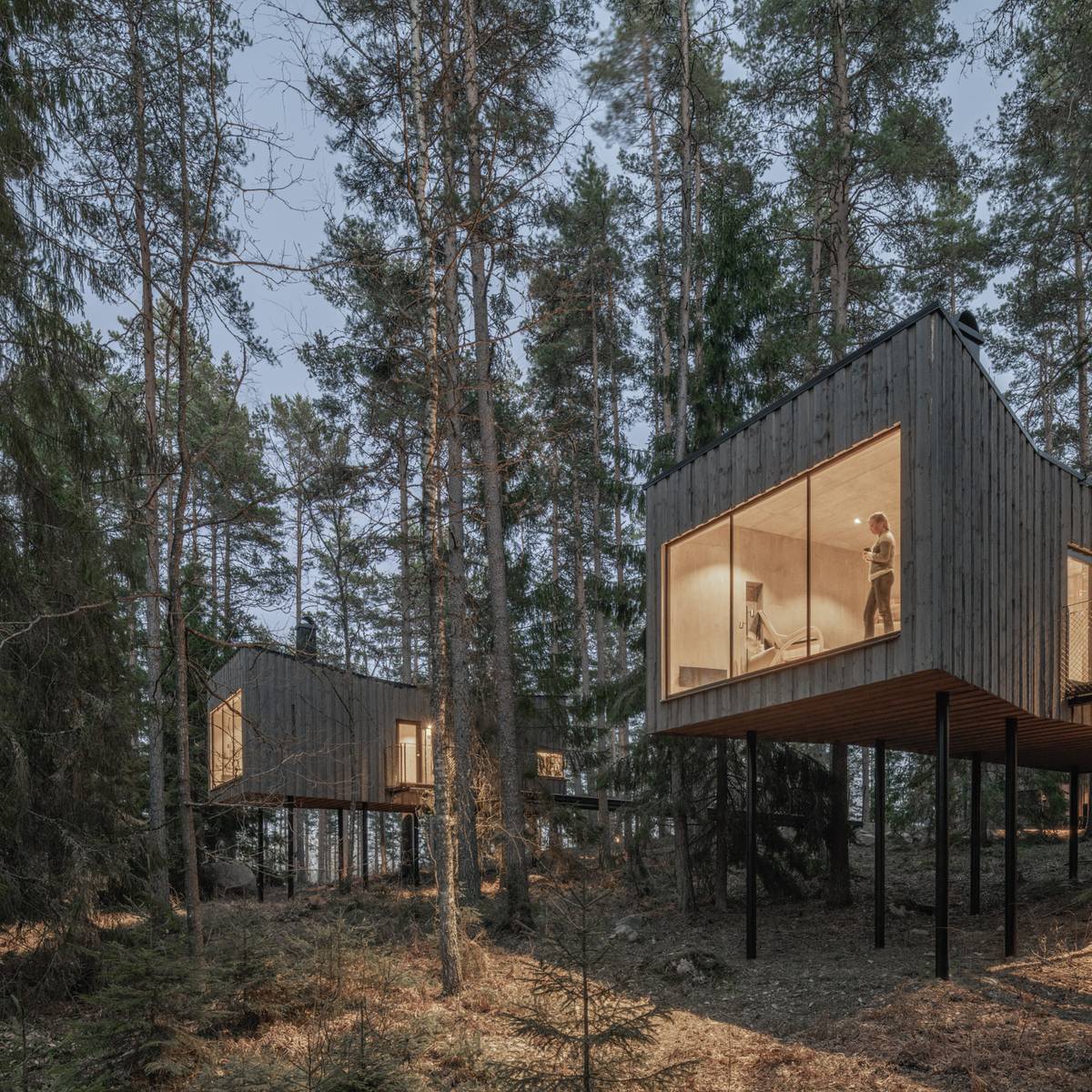
If you're looking for a comfortable hotel, unique accommodation in nature or somewhere to stay right on the trail, the High Coast has plenty of memorable places to spend the night.

  • The Hotel High Coast: located beside the iconic High Coast Bridge and offers panoramic sea views.
  • FriluftsByn: Located at the foot of Skuleberget, this outdoor hub offers cabins, campsites and hostel accommodation, with the High Coast Trail and Skuleskogen National Park just steps away.
  • Glamping Höga Kusten: Sleep in a fully equipped safari tent surrounded by forest. Available in both summer and winter.

Things to do:

Explore the coastline by kayak, cycle along picturesque roads, visit fishing villages and experience the local cuisine and culture. Depending on the season, you can enjoy a combination of activities such as hiking, kayaking, mountain biking, fishing, wildlife experiences and boat trips through the archipelago.

  • Naturum Höga Kusten: Find out about this UNESCO World Heritage Site by exploring the exhibitions, maps and practical information, before setting off on the trails.
  • High Coast Kayak: Join a guided kayaking tour or explore the archipelago at your own pace by renting equipment.
  • Ulvön: Visit this island, which is known for its fishing heritage, beautiful archipelago scenery, and its famous fermented herring dish, surströmming.

The High Coast is also home to farm shops, art galleries, and museums, and Skule Naturscen hosts concerts and festivals throughout the summer. For more hiking inspiration and practical visit the official High Coast tourism website: https://www.hogakusten.com/en

1 / 7

The High Coast

The High Coast in the Ångermanland province of northeastern Sweden, is a UNESCO World Heritage site known for its unique and highly scenic land and seascape and its distinctly red Nordingrå granite cliffs and rocks.

Photo: Yirui Aries/Visit Sweden

/ 7
A woman stands with her arms outward looking at the view of the coast.

The High Coast

Photo: Yirui Aries/Visit Sweden

A hiking meal with tomato soup, bread and hand-picked mushrooms on a wooden table.

A hiking meal

Photo: Moa Karlberg/imagebank.sweden.se

Höga Kusten

Höga Kusten

Photo: Friluftsbyn Höga Kusten/imagebank.sweden.se

Hiking in the High Coast

Hiking in the High Coast

Photo: Friluftsbyn Höga Kusten/imagebank.sweden.se

The High Coast in the Ångermanland

The High Coast in the Ångermanland

Photo: Yirui Aries/imagebank.sweden.se

A village and boat huts surrounded by greenery and calm water.

Ulvön, the High Coast

Photo: Ulvön Info

Fermented herring

Fermented herring

Photo: Tina Stafrén/imagebank.sweden.se

Hike Southern Öland – Orchids, Birdlife and the Great Alvar

Southern Öland offers a completely different hiking experience. Instead of mountain peaks, you will find wide-open landscapes, limestone plains, grazing animals, stone walls and traditional villages. This UNESCO World Heritage Site has been shaped by humans for over 5,000 years. At its heart lies Stora Alvaret (the Great Alvar), one of the world's largest alvar landscapes.

If you prefer accessible day hikes at a slower pace, choose Southern Öland. Well-marked trails wind through nature, across the Great Alvar and alongside the coast. There are plenty of opportunities to stop at cosy cafés, farm shops, and local food producers along the way.

When to go hiking:

In Öland, each season reveals a different side of the island. In spring, the Great Alvar is carpeted with orchids and wildflowers, while in summer you can enjoy swimming, lively harbour towns and farm shops. Autumn is marked by bird migration and Skördefesten, Sweden's largest harvest festival. Winter, meanwhile, offers peaceful coastal walks and exceptionally dark skies for stargazing.

Where to stay:

Southern Öland offers accommodation to suit every hiking style, whether you're looking for a boutique hotel, a traditional guesthouse or cottages, campsites and simple shelters across the island.

  • The Hotel Magasin 1: a boutique hotel in Mörbylånga and a convenient base for hikers following the Mörbylånga Trail.
  • Gammalsbygårdens Gästgiveri: traditional limestone buildings, homemade food, and a peaceful location near Eketorp Fortress and Ottenby.
  • Hotel Skansen: comfortable accommodation with a spa, perfect for unwinding after a day spent outdoors.

Things to do:

Hiking is just the beginning. Depending on the time of year, you can enjoy activities such as birdwatching, guided nature walks, horse riding, tasting local food and drink, and visiting charming farm shops and villages.

  • Naturum Ottenby: The visitor centre for southern Öland, offering exhibitions, guided activities, and practical information about the World Heritage Site.
  • Ölandsguiderna: Guided walks exploring the island's history, nature, and UNESCO World Heritage landscape.
  • Station Linné: A variety of nature experiences throughout the year, including orchid walks, bat safaris and family-friendly wildlife activities.

No visit to Öland is complete without trying Kroppkakor, the island's traditional potato dumplings and one of its best-loved local specialties. You can find trail maps, route descriptions and practical information on Naturkartan. For more hiking inspiration and practical travel information, visit the official Öland tourism website: https://en.oland.se/

1 / 4

Hiking, Öland

Hikers and cyclists can explore Öland's extensive trail network, including the famous Öland Trail (Ölandsleden) that covers nearly the entire island.

Photo: Öland

/ 4
Two hikers walking by a small pond with some rocks in the foreground and trees in the background.

Hiking, Öland

Photo: Öland

A lighthouse stands beyond an ancient limestone wall in the open landscape of Southern Öland.

Långe Jan lighthouse

Photo: UpZoneStudios/Oland&Co

A woman kneels beside grazing cows in a coastal meadow on Southern Öland, with the Baltic Sea in the background.

Grazing cows, Öland

Photo: UpZoneStudiosOland&Co

Kroppkaka

Kroppkaka

Photo: Tina Stafrén/imagebank.sweden.se

Three UNESCO Hiking Trails in Sweden

Kungsleden (Laponia)

The King’s Trail is Sweden’s most famous long-distance hiking trail. It stretches approximately 450 kilometres through Arctic Sweden. Part of the route runs through the Laponia UNESCO World Heritage Site.

Höga Kustenleden (High Coast)

This long-distance hiking trail, approximately 130 kilometres long, runs through the UNESCO World Heritage Site Höga Kusten.

Mörbylångaleden (Southern Öland)

This hiking trail, approximately 84 kilometres long, runs through the UNESCO World Heritage Site Agricultural Landscape of Southern Öland.